Residency Program
Affiliated with Oregon Health & Science University and located in beautiful Portland, Oregon, the ophthalmology residency program at the Casey Eye Institute (CEI) is one of the most sought-after residencies in the United States.

We are looking for talented, well-rounded individuals who will contribute in their field as comprehensive ophthalmologists or subspecialists.
Oregon Health & Science University’s ophthalmology residency program was founded in 1944 and was the first ophthalmology residency program in the six northwestern states. Since that time, the Casey Eye Institute has grown by leaps and bounds, with outstanding achievements in ophthalmology research, patient care and educating the next generation of specialists. Over the past 15 years, the number of surgery patients has quadrupled, research has tripled and patient visits and staffing have doubled.

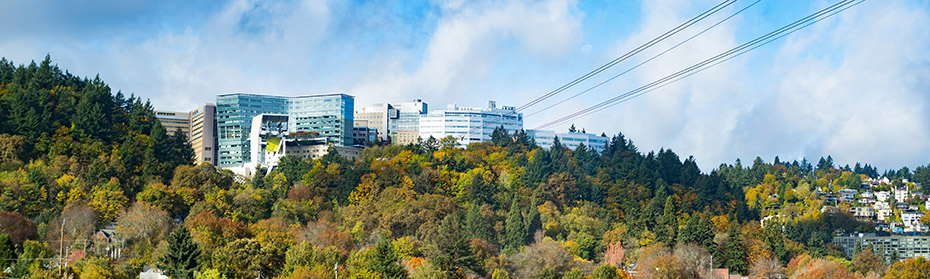
Casey Eye Institute researchers recently expanded into a 20,000-square foot space in OHSU's new Biomedical Research Building. Patient care and teaching activity also expanded with the completion in 2006 of the OHSU Center for Health & Healing (CHH) in Portland’s South Waterfront district. This new ambulatory care center adds an additional 11,000 square feet of clinic space to Casey Eye Institute. The Portland Aerial Tram puts the new center just minutes away from OHSU's Marquam Hill Campus.
Applicants
We offer five positions in our residency training program beginning July 1. The Casey Eye Institute participates in the Ophthalmology Matching Program sponsored by the Association of University Professors of Ophthalmology (AUPO). All applications will be processed by the Central Application Service (CAS).
Please contact:
Ophthalmology Matching ProgramP.O. Box 7584
San Francisco, CA 94120-7580
Fax: 415 561-8535
415 447-0350
Applicants to the ophthalmology residency program at the Casey Eye Institute must register through the Ophthalmology Matching Program (OMP). The Central Application Service (CAS), which is an automatic part of the OMP registration, distributes applications to the programs specified. Any application not received directly from the CAS cannot be considered. No supplemental application is necessary.
The Residency Selection Committee must receive applications by the September 28, 2012 deadline for residency positions beginning July 1, 2014. We expect the dean's letter as soon as possible thereafter. A photograph is not necessary when we initially review the applications but is strongly suggested by the time you interview.
Interviews
Applicants selected for personal interviews with members of the Residency Selection Committee will be notified by email starting October 23, 2012. Interviews will be scheduled on the following dates:
Saturday, November 17, 2012
Saturday, December 1, 2012
During Interview Day, applicants will meet with faculty members and current residents and tour OHSU’s facilities, including a trip to the Center for Health and Healing on the Portland Aerial Tram.
Resident Rotation Schedule
PGY-1 - All physicians commencing ophthalmology residency must complete an internship program at an accredited institution. Most residents have completed their PGY-1 year in internal medicine or transitional programs. Others have completed surgical or pediatric internships. Accredited PGY-1 programs in the Portland area are offered at:
Providence Medical Center & St. Vincent Hospital and Medical Center:
http://www.providence.org/oregon/medical_education/default.htm
OHSU does not offer a PGY-1 year in internal medicine for physicians going on to an ophthalmology residency.
Rotations (10 weeks)
PGY2 - 1st yr- Neuro-Ophthalmology, VAMC Eye Clinic
- Oculoplastics – Ophthalmic Pathology
- Low Vision, Contact Lens. Casey Eye Institute Comprehensive Clinic, Uveitis, Research
- Casey Eye Comprehensive Clinic (CHH & Pediatrics)
- VAMC Eye Clinic
- Ophthalmology Inpatient Consultation(Adult OHSU, Pediatrics DCH, & ER)
- Cornea & External Diseases
- Glaucoma
- Pediatric Ophthalmology and Strabismus
- VAMC Eye Clinic
PGY4 - 3rd yr
- Casey Eye Comprehensive Clinic - CHH
- Retina, Uveitis, VACMC
- Comprehensive Eye Clinic - VAMC
- Subspecialty Surgery – VAMC
- Comprehensive Eye Clinic – Legacy Devers Eye
Call Responsibilities:
| 1st year |
Primary - OHSU Adult and Pediatric Ophthalmology Consultations ( OHSU, DCH, ER, VA) Monday – Friday 5:00pm – 7:00am; Friday 5:00pm – Monday 7:00 am Every 5th weeknight, every 5th weekend |
| 3rd year | Back-up OHSU Adult and Pediatric Ophthalmology Consultations (OHSU, DCH, ER, VA) Primary - Legacy Emanuel Trauma Service Eye Consults Monday – Friday 5:00pm – 7:00am Friday 5:00pm – Monday 7:00 am Every 5th weeknight, every 5th weekend |
Inpatient Consultations:
| 1st year |
VAMC Monday – Friday 7:00 am – 5:00 pm |
| 2nd year |
Inpatient OHSU/DCH/ER Monday – Friday 7:00 am – 5:00 pm |
| 3rd year | Devers Senior Resident: Legacy Ophthalmology Consultations Monday – Friday 7:00 am – 5:00 pm |
Highlights of the Residency Program:
- Talented faculty who are committed to resident education
- Excellent training in preparation for both competitive fellowships and comprehensive ophthalmology
- Exposure to all generally recognized subspecialties with deep breadth of faculty in the subspecialties
- Large resident surgical volume
- Microsurgical wet lab experience
- Nationally, a top research center with over $10 million per year in external research funding
- Protected research time
- Preparation for a career in academic medicine
- A 120,000-square foot, state-of-the-art facility
- Adjacent affiliated Veteran's Administration (VA) Hospital
- Adjacent affiliated OHSU Doernbecher Children's Hospital
- Affiliated Devers Eye Institute (DEI)
- Mentor program
- Practice management skills to succeed in today's rapidly changing managed care environment
Overview of Rotations
First Year (PGY-2)
The first year begins with a 2 week orientation which includes lecture and hands-on instruction in examination techniques. Each ophthalmic subspecialty provides the new residents with a basic overview. During orientation, residents also participate in a microsurgical wet lab. The orientation concludes with a team building day for all of the residents. Activities in past years have included white water rafting, hiking, and horseback riding on the Oregon coast.
Second Year (PGY-3)
The second year of training includes rotations in glaucoma, retina, uveitis, pediatric ophthalmology, and cornea, refractive, and external disease. During the second-year VA rotation, the resident performs laser treatment for glaucoma and retina patients. The second-year resident also begins to perform cataract surgery as the primary surgeon during this rotation.Third Year (PGY-4)
During the resident’s third year, patient management becomes more complex both medically and surgically. At this point, the senior resident performs a variety of intra- and extraocular surgery, including complex oculoplastic procedures and advanced intraocular surgery. The resident has general and subspecialty clinics at Casey Eye Institute and at the VA. Ten weeks are spent at Devers Memorial Eye Clinic, a general clinic at the affiliated Devers Eye Institute.
As residents mature, developing surgical skills and increased judgment, they perform more complex procedures. During the first year, minor outpatient extraocular and plastic surgeries are performed. Second-year residents perform various laser procedures, as well as surgeries in the areas of strabismus, cataract, glaucoma, cornea, and retina/vitreous. In the third year, more complex oculoplastic procedures are performed. The majority of cataract surgeries are performed in the last year of residency. The surgical volume at our program is high, with recent graduates having performed an average of 179 cataracts surgeries as primary surgeon by completion of the residency program.
In addition to patient care duties, residents are also required to review assigned articles and/or texts for specialty clinics. Depending on the rotation, they may also present cases at conferences.
Residents are also required to maintain a current surgical log using the ACGME web-based case log system and current duty hour timekeeping.
Conferences and Educational Resources
Formal Teaching Exercises
Protected time is set aside every Friday morning for teaching. No resident clinics are scheduled on Friday mornings. A formal course for residents provides instruction in areas of ophthalmology and practice management. Faculty members lead the lectures, which are structured around the core information provided in the basic and clinical science course from the American Academy of Ophthalmology.
Topics• Fundamentals and Principles of Ophthalmology, Ethics
• Optics, Refraction, Contact Lenses, Low Vision Rehabilitation
• Ophthalmic Pathology
• Neuro-Ophthalmology
• Pediatric Ophthalmology and Strabismus
• Orbit, Eyelids, and Lacrimal System
• External Disease and Cornea
• Retina/Vitreous, Uveitis, and Ocular tumors
• Glaucoma
• Lens, Cataract Surgery, Anterior Segment Trauma
• Socioeconomics of Health Care, Cost-Effective Medical Practice, Ophthalmology Advocacy
The lecture series is given on a recurrent basis. A core curriculum is presented at the beginning of each academic year to cover common and essential information for the ophthalmology residents. Subsequently, cycling every two years, more detailed didactic information is presented for each of the areas in Ophthalmology. Residents are given assignments in specific textbooks and/or papers which are of particular benefit. Prior to the lectures, information is provided regarding the topics to be covered and residents are expected to review the material prior to lecture.
In addition to formal teaching exercises, the following conferences are held:
- Casey Eye Institute–Devers Eye Institute (DEI) Collaborative Grand Rounds (twice a month): Subspecialty topics presented by Casey and Devers faculty members, and renowned visiting guest speakers. Attended by residents, faculty, and ophthalmologists in the community.
- Glaucoma Conference (monthly): Attended by CEI & DEI glaucoma faculty Residents present cases for discussion.
- Photography Conference / Inpatient Consultation Conference (every 2 months): Residents and faculty present photographic cases of patients.
- Posterior Segment and Ophthalmic Imaging Conference (twice a month): A case based conference presented by retina fellows and retina faculty.
- Neuro-Ophthalmology Conference (monthly): attended by residents, CEI & DEI neuro faculty & fellow.
- Uveitis Conference (monthly): attended by residents, CEI uveitis faculty & fellows.
- Neuroradiology Conference (1-2 times per month): Presented by an OHSU neuro-radiologist, this case-based conference emphasizes radiographic features of ophthalmic pathology.
- Pathology Conference (monthly): A case based conference presented by our ocular pathologist/oncologist and chair, David Wilson, MD. Attended by residents.
- Surgery and Case Management Conference (every 2 months): Resident presentations of difficult to manage medical and surgical cases.
- Journal Club (monthly): Hosted monthly by a faculty member, this is a popular forum for residents to review recent literature.
- Named lectureship series in which lectures are given by renowned visiting guest speakers: the Kenneth C. Swan lecture in Glaucoma, The Leonard Christensen Lecture in Ophthalmic Pathology, the Robert C. Watzke Lecture in Retina, the Fredrick T Fraunfelder Lecture in Corneal and External Diseases, the William T Shults Lecture in Neuro-ophthalmology, the John L. Wobig lecture in Oculoplastics, the James T. Rosenbaum Lecture in Uveitis, the James W. Damon Lecture in Pediatric Ophthalmology and Strabismus.
All residents participate in the Ophthalmic Knowledge Assessment Program (OKAP). This written examination is held each spring and is constructed in a format that prepares the resident for the written qualifying examination. Residents participate in this examination each year.
Throughout the year, residents also have protected time to attend local meetings including the Oregon Ophthalmological Alumni Association, Oregon Academy of Ophthalmology, Thorny Issues in Ophthalmology, and Casey Eye Resident and Fellow Research Forum.
The Kenneth Swan Library provides up to date resources for residents in the form of journals, textbooks, and video-library.
Resident Evaluations
Resident evaluations are constructed to reflect performance in the six core competencies as outlined by the Accreditation Council for Graduate Medical Education Outcomes Project. Each resident will be evaluated in the following six core competencies:• Patient care
• Medical knowledge
• Professionalism
• Interpersonal and communication skills
• Practice-based learning and improvement
• System-based practice
At the conclusion of each rotation, faculty members who have supervised the resident will evaluate their performance. In order to obtain more comprehensive assessment of resident performance, evaluations are also obtained from patients and staff. The evaluations are written and become part of the resident’s permanent record. In an effort to identify strengths and weaknesses in the residency as early as possible, the program director meets formally and individually with each resident every 6 months. The program director also meets with residents as a group at least quarterly. Residents’ input is routinely sought and has always been integral to program development.
Research Opportunities
Scholarly Activities
Research is valued and supported at the Casey Eye Institute. One strength of our program is our commitment to resident research. Protected time is set aside for research activities. Faculty members serve as mentors to the residents on projects. Residents are required to begin a research project in their first year of residency. Research may be either clinical or in the basic sciences. The residents’ research efforts are presented each spring at the Casey Eye Resident and Fellow Research Forum. All residents are required to submit their work in manuscript form to a peer-reviewed journal.
Residents are also encouraged and supported to attend national meetings where they have the opportunity to present their research. Residents commonly present their research at national meetings such as the American Academy of Ophthalmology, the Association for Research in Vision and Ophthalmology, the American Association for Pediatric Ophthalmology and Strabismus, the American Society of Cataract and Refractive Surgery, the American Society of Ophthalmic Plastic and Reconstructive Surgery, the North American Neuro-Ophthalmology Society.
Surgical Education
Resident surgical volume is high, with residents typically far-exceeding the AAMC guidelines. The average number of cataract surgeries performed in recent years by graduating residents in which the resident was the primary surgeon was 179.
Microsurgical Experience
Residents have ready access to operating microscopes and surgical equipment intended for practice surgery. Formal surgical group wet labs are scheduled annually. Individual wet lab experience also occurs for residents beginning their second year rotation at the VA hospital. Additional microsurgical wetlab activity may occur on the resident’s own time as often as the resident would like.
Living in Portland