Psychiatry Grand Rounds
September 16, 2025
Creative arts: Therapeutic experience in global and local practice of a child psychiatrist
Jaswant Guzder, BSC, MDCM, FRC
Tuesday, Sept. 16, 12-1 p.m.
Learning objectives:
- Overview of the transitional space of creative arts as a psychotherapeutic modality.
- Overview of some mental health global health projects engaging with at risk and marginalized populations through creative arts.
- A resilience promotion, community engagement and task shifting as an outcome of creative arts therapeutic projects.
October 7, 2025
How Psychiatry Can Embrace Substance Use Treatment: A Case Study at OHSU
Lydia Bartholow, D.N.P., PMHNP and James Koved, M.D.
Tuesday, Oct. 7, 12-1 p.m.
Learning objectives:
- Review program development of a substance use stabilization center within OHSU’s psychiatric emergency department.
- Identify legal and ideologic barriers between substance use and mental health treatment.
- Describe opportunities for mental health providers in all settings to care for individuals with co-occurring psychiatric and substance use disorders.
October 21, 2025
The "Self" on the Streets: Ethics of Street Psychiatry
Wil Berry, M.D.
Tuesday, Oct. 21, 12-1 p.m.
Learning objectives:
- Understand the principles of street psychiatry.
- Appreciate common ethical and clinical challenges that may arise in street psychiatry models.
November 4, 2025
Navigating Mental Health Crisis: Understanding Suicide-related Help-seeking Among Young Adults in Oregon
Kate LaForge, Ph.D., M.P.H.
Tuesday, Nov. 4, 12-1 p.m.
Learning objectives:
- Discuss mental health crisis service options.
- Identify barriers to suicide-related help-seeking among young adults.
- Explain young adults’ use and perception of crisis text services within crisis care systems.
November 11, 2025
DSM-5-TR Outline for Cultural Formulation and Cultural Formulation Interview: Tools for Professionalism (Cultural Awareness and Culturally/Structurally Competent Care)
Francis Lu, M.D.
Tuesday, Nov. 11, 12-1 p.m.
Learning objectives:
- Recognize that both cultural awareness and culturally/structurally competent care are two sub-competencies within the core competency of Professionalism of the ACGME accreditation standards for general psychiatry residency training programs.
- Define the 5 parts of the DSM-5-TR Outline for Cultural Formulation and apply it in clinical assessment of patients to enhance professionalism.
- Cite the 16 questions of the DSM-5-TR Cultural Formulation Interview and apply it in clinical assessment of patients to enhance professionalism.
November 18, 2025
Cultural Aspects of PTSD Assessment and Treatment
James Boehnlein, M.D.
Tuesday, Nov. 18, 12-1 p.m.
Learning objectives:
- List several cultural variables that may influence the presentation of PTSD in the clinical setting.
- Discuss the impact of trauma on individuals, families and social systems.
- Describe how culture influences comprehensive treatment of PTSD.
December 2, 2025
Borderline Personality Disorder and Culture
Larry Merkel, M.D., Ph.D.
Tuesday, Dec. 2, 12-1 p.m.
Learning objectives:
- Participants will be able to list the issues involved with diagnosing Borderline Personality Disorder.
- Participants will be able to identify the variations in Borderline Personality Disorder due to culture.
- Participants will be able to describe how culture impacts the course and manifestations of Borderline Personality Disorder.
December 16, 2025
De-mystifying Jung’s Archetypes with Embodied Cognition: Dreams and Clinical Applications
Erik Goodwyn, M.D.
Tuesday, Dec. 16, 12-1 p.m.
Learning objectives:
- Identify the presence of spontaneous thought (i.e., dreams, visions, sudden impressions/fantasies, etc.).
- List the primary functions of spontaneous thought as reviewed in neuroscientific literature.
- Identify the subset of spontaneous thought content that qualify as "archetypes" (i.e., universal symbolism).
- Recognize and use Embodied Cognition to interpret archetypal and non-archetypal spontaneous thought presented in clinical material.
January 6, 2026
Trauma and Epistemic Trust: The Pernicious Impact of Childhood Adversity and Therapeutic Solutions
Peter Fonagy, Ph.D.
Tuesday, Jan. 6, 12-1 p.m.
Learning objectives:
- Understand the psychological and developmental mechanisms through which childhood trauma disrupts epistemic trust — the capacity to accept social communication as reliable and relevant — and explore how this disruption contributes to emotional, relational, and psychiatric difficulties across the lifespan.
- Identify clinical indicators of epistemic mistrust and epistemic hypervigilance in children, adolescents, and adults with histories of adversity, and consider how these processes manifest in the therapeutic relationship.
- Apply mentalization-based and relational strategies to restore epistemic trust in therapy, including specific interventions that foster safety, curiosity, and the re-opening of social learning channels following trauma.
January 20, 2026
Early Palliative Care Integration for Patients with Blood Cancers: Supporting Coping and Improving Mental Health Outcomes
Jason Webb, M.D.
Tuesday, Jan. 20, 12-1 p.m.
Learning objectives:
- Describe the role of early integrated palliative care for patients with hematologic cancers.
- Demonstrate the role of adaptative coping skills development as the target intervention to improve mental health outcomes.
- Establish the evidence base from three randomized clinical trials on early palliative care integration on improved outcomes for depression, anxiety, and post-traumatic stress disorder.
February 3, 2026
Muslim Cultural Customs and Healing Practices
Sameer Yousuf, M.D.
Tuesday, Feb. 3, 12-1 p.m.
Learning objectives:
- List five pillars of the Muslim faith.
- Describe two inequities or discriminations faced by members of the US Muslim immigrant/refugee community.
- Identify three ways to demonstrate cultural responsiveness for Muslim patients/families.
- Describe at least one cultural perspective regarding mental health in Muslim communities.
- List and describe three cultural healing practices used in Muslim communities.
- List two local organizations/resources serving the local Muslim/refugee community.
February 17, 2026
Strategic ACT: Focused Skills for Flexible Minds
Patricia “Patti” Robinson, Ph.D.
Tuesday, Feb. 17, 12-1 p.m.
Learning objectives:
- Describe the key characteristics of integrated behavioral health services using GATHER.
- Describe the evidence for using Focused Acceptance and Commitment Therapy (FACT) in delivering primary care behavioral health services.
- Select a new FACT strategy to use in your delivery of clinical services.
March 3, 2026
Progress Isn’t Uniform: The Battle for LGBTQ+ Rights in the US and UK Armed Forces
Sarah Rabin, Ph.D. Candidate
Tuesday, Mar. 3, 12-1 p.m.
Learning objectives:
- To describe the histories of LGBTQ+ rights in the US and UK militaries.
- To contextualize these histories within the wider cultural contexts given current challenges with LGBTQ+ rights.
- To discuss current challenges with conducting LGBTQ+ military research, both in the US and UK.
- To offer a brief overview of my PhD, which focuses on the health and well-being of UK LGBTQ+ serving and ex-serving (veteran) military personnel who joined and served after the LGBTQ+ ban was lifted.
March 17, 2026
Let’s Talk about Sex: Dating and Intimacy for Patients with Intellectual and Developmental Disability
Nina Bihani, M.D.
Tuesday, Mar. 17, 12-1 p.m.
Learning objectives:
- Explain how to assess capacity for consent in patients with intellectual & development disability.
- Analyze how to discuss issues of dating, sexuality, and sexual safety with patients with intellectual and developmental disabilities.
- Explore the ethics of consent and decision-making with regards to this patient population.
May 19, 2026
Psychiatry and Moral Bioenhancement: The Case of Psychopathy
Fabrice Jotterand, Ph.D., M.A.
Tuesday, May 19, 12-1 p.m.
Learning objectives:
- Define and contextualize the concept of moral bioenhancement within both the clinical setting and the broader social context.
- Outline potential novel applications of neurotechnology in psychiatry for the treatment of individuals suffering from mental disorders with moral pathologies.
- Assess the feasibility, utility, and limitations of moral bioenhancement techniques for the diagnosis and treatment of individuals exhibiting psychopathic traits.
Grand Rounds Notifications
We send out notifications a few days in advance of Grand Rounds. If you would like to receive these notifications or receive an error, please email psych@ohsu.edu
Watch Grand Rounds Live!
Use Google Chrome browser to access the live stream of Psychiatry Grand Rounds. If the button link below does not work, try to manually copy and paste the following link into a new google chrome window: https://echo360.org/section/faa3b8a4-7bd6-424e-b7a7-2d7e96f6be51/public
Past presentations
To view past presentation recordings, please visit our archived videos page. You will need to use google chrome browser.
Apply to present at Psychiatry Grand Rounds
If you would like to make a presentation at Psychiatry Grand Rounds, please fill out one of our applications at the link below. Our committee will review the material and if it is a good fit for our program, we will reach out to you with available dates.
Receiving CME
OHSU CME credits for physicians are now available in CME Passport. CME Passport is a free, centralized web application that enables physicians to view, track, and generate transcripts of their reported CME credits. For more information, please visit the Accreditation Council for Continuing Medical Education CME Passport Information for Providers page.
To access your OHSU CME transcript, please visit the CME tracker.
Please follow the link below to fill out an evaluation survey to receive credit for participating in Psychiatry Grand Rounds. The survey will not allow you to submit attendance more than 10 days past the date of the presentation.
Typically held the 1st and 3rd Tuesdays of each month
Psychiatry Grand Rounds provides continuing medical education for the public. We strive to enable discussion that is both about and involves the patient so the physician can better understand the depth of one's mental illness. In Psychiatry Grand Rounds, we explore the history of certain policies and procedures in place for handling mentally ill patients and what can happen to improve care and treatment that they receive, as well as to better explain and expand on various forms of mental illness and how treatment should be approached and practiced by the clinician.
Accessing psychiatry grand rounds remotely
Our lectures are accessible to be viewed remotely. (Use Google Chrome Browser)
To receive CME credit, you must watch the lecture either live during the time of the presentation or from our archived presentations. After you watch the Grand Rounds, you can submit your attendance by filling out an evaluation survey, the link to which is given in the above section labeled "Receiving CME". The survey will not allow you to submit attendance more than 10 days past the date of the presentation. You can sign up for the announcements below. If you have any questions please contact the Grand Rounds Coordinator, Charlotte Heard, at psych@ohsu.edu.
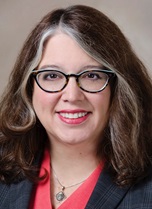
Program Co-Chair: Stephanie Maya Lopez, M.D., FAPA
Associate Professor of Psychiatry, OHSU
Program Director, Forensic Psychiatry Fellowship Program, OHSU
Board-certified in General and Forensic Psychiatry

Grand rounds committee members
- Karim Afzal
- Cem Batuman
- Jonathan Betlinski
- Chris Blazes
- Charlotte Heard
- Andrea Hughes
- George Keepers
- Sheldon Levy
- Maya Lopez
- Eva Mathews
- Aryan Sarparast
- Lisa Schimmel
- Craigan Usher
- Nadia Wahba
Accreditation
Oregon Health & Science University School of Medicine is accredited by the Accreditation Council for Continuing Medical Education to provide continuing medical education for physicians.
Credit
OHSU School of Medicine designates this live activity for a maximum of 1.0 AMA PRA Category 1 Credits™. Physicians should claim only the credit commensurate with the extent of their participation in the activity.
Target audience
Psychiatrists, psychologists, psychiatry residents and fellows, medical students, social workers, master's in administration, physician assistants, nurse practitioners, nurses, pharmacists, and all physicians. Additionally, Psychiatry Grand Rounds is open to the public.