Psychiatry Grand Rounds
Oct. 6, 2026
Consequences of Extreme Heat for People Living with Schizophrenia
Randall White, M.D. and Liv Yoon, Ph.D.
Tuesday, Oct. 6, 12-1 p.m.
Learning objectives:
- Describe the learnings from the 2021 extreme heat event in BC
- Explore the intersecting and compounding impacts of social inequities that contribute to heat vulnerability in people with schizophrenia
- Analyze the clinical implications of biological and behavioral vulnerabilities to extreme heat related to chronic mental disorders
Oct. 20, 2026
The Value of Person-Centered Cultural Assessment in Clinical Practice
Roberto Lewis-Fernández, M.D.
Tuesday, Oct. 6, 12-1 p.m..
Learning objectives:
- Define the value of cultural assessment in routine psychiatric care for engagement, diagnosis, and treatment planning
- Describe the development and components of the Cultural Formulation Interview (CFI), the DSM-5-TR cultural assessment
- Explain the 4 main uses of the CFI to date.
Nov. 3, 2026
Progress Isn't Uniform: The Battle for LGBTQ+ Rights in the US and UK Armed Forces
Sarah Rabin, Ph.D. Candidate
Tuesday, Nov. 3, 12-1 p.m.
Learning objectives:
- To describe the histories of LGBTQ+ rights in the US and UK militaries
- To contextualize these histories within the wider cultural contexts given current challenges with LGBTQ+ rights
- To discuss current challenges with conducting LGBTQ+ military research, both in the US and UK
- To offer a brief overview of my PhD, which focuses on the health and well-being of UK LGBTQ+ serving and ex-serving (veteran) military personnel who joined and served after the LGBTQ+ ban was lifted
Nov. 10, 2026
Assessing Professional Misconduct: The Shame of Bad Decisions
Richard Martinez, M.D., M.H., DLFAPA
Tuesday, Nov. 10, 12-1 p.m.
Learning objectives:
- Familiarize participants with broad set of professional behaviors that are considered professional misconduct
- Reflect on professional identity and role of misconduct with accompanying shame
- Learn about vulnerability of all health professionals to lapse in ethical judgement and behavior
- Learn about ethics remediation and rehabilitation for those sanctioned for professional misconduct.
Nov. 17, 2026
Children in Crisis: Lessons from Ukraine, Gaza, and Migrant Children in US Custody
Paul Wise, M.D., M.P.H.
Tuesday, Nov. 17, 12-1 p.m.
Learning objectives:
- To use three cases to illustrate the impact of complex security and political environments on the health and well-being of children
- To describe strategies to protect children in these complex security and political environments
- To describe the continuing evolution of US custodial systems for migrant children in detention
Dec. 1, 2026
Deprescribing: Top Efficacy Limiting Medication Combinations to Target First for Discontinuation
Paul Zarkowski, M.D.
Tuesday, Dec. 1, 12-1 p.m.
Learning objectives:
- List common efficacy limiting interactions for each major neurotransmitter in psychiatric practice
- List the medications primary care doctors and other specialists may be prescribing for your patients that will limit efficacy
- Distinguish between adjunctive medication to address side effects and efficacy limiting interactions
Grand Rounds Notifications
We send out notifications a few days in advance of Grand Rounds. If you would like to receive these notifications or receive an error, please email psych@ohsu.edu
Watch Grand Rounds Live!
Use Google Chrome browser to access the live stream of Psychiatry Grand Rounds. If the button link below does not work, try to manually copy and paste the following link into a new google chrome window: https://echo360.org/section/faa3b8a4-7bd6-424e-b7a7-2d7e96f6be51/public
Past presentations
To view past presentation recordings, please visit our archived videos page. You will need to use google chrome browser.
Apply to present at Psychiatry Grand Rounds
If you would like to make a presentation at Psychiatry Grand Rounds, please fill out one of our applications at the link below. Our committee will review the material and if it is a good fit for our program, we will reach out to you with available dates.
Receiving CME
OHSU CME credits for physicians are now available in CME Passport. CME Passport is a free, centralized web application that enables physicians to view, track, and generate transcripts of their reported CME credits. For more information, please visit the Accreditation Council for Continuing Medical Education CME Passport Information for Providers page.
To access your OHSU CME transcript, please visit the CME tracker.
Please follow the link below to fill out an evaluation survey to receive credit for participating in Psychiatry Grand Rounds. The survey will not allow you to submit attendance more than 10 days past the date of the presentation.
Typically held the 1st and 3rd Tuesdays of each month
Psychiatry Grand Rounds provides continuing medical education for the public. We strive to enable discussion that is both about and involves the patient so the physician can better understand the depth of one's mental illness. In Psychiatry Grand Rounds, we explore the history of certain policies and procedures in place for handling mentally ill patients and what can happen to improve care and treatment that they receive, as well as to better explain and expand on various forms of mental illness and how treatment should be approached and practiced by the clinician.
Accessing psychiatry grand rounds remotely
Our lectures are accessible to be viewed remotely. (Use Google Chrome Browser)
To receive CME credit, you must watch the lecture either live during the time of the presentation or from our archived presentations. After you watch the Grand Rounds, you can submit your attendance by filling out an evaluation survey, the link to which is given in the above section labeled "Receiving CME". The survey will not allow you to submit attendance more than 10 days past the date of the presentation. You can sign up for the announcements below. If you have any questions please contact the Grand Rounds Coordinator, Charlotte Heard, at psych@ohsu.edu.
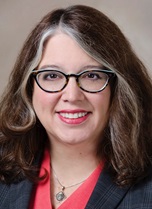
Program Co-Chair: Stephanie Maya Lopez, M.D., FAPA
Associate Professor of Psychiatry, OHSU
Program Director, Forensic Psychiatry Fellowship Program, OHSU
Board-certified in General and Forensic Psychiatry
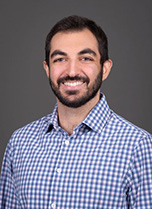
Program Co-Chair: Cem Batuman, M.D.
Assistant Professor of Psychiatry, OHSU
Grand rounds committee members
- Karim Afzal
- Cem Batuman
- Jonathan Betlinski
- Chris Blazes
- Charlotte Heard
- Andrea Hughes
- George Keepers
- Sheldon Levy
- Maya Lopez
- Eva Mathews
- Lisa Schimmel
- Craigan Usher
- Nadia Wahba
Accreditation
Oregon Health & Science University School of Medicine is accredited by the Accreditation Council for Continuing Medical Education to provide continuing medical education for physicians.
Credit
OHSU School of Medicine designates this live activity for a maximum of 1.0 AMA PRA Category 1 Credits™. Physicians should claim only the credit commensurate with the extent of their participation in the activity.
Target audience
Psychiatrists, psychologists, psychiatry residents and fellows, medical students, social workers, master's in administration, physician assistants, nurse practitioners, nurses, pharmacists, and all physicians. Additionally, Psychiatry Grand Rounds is open to the public.