Heart Transplant Program
OHSU has the largest and longest-running heart transplant program in the region and has performed more than 700 heart transplants.
OHSU offers comprehensive support services for heart transplants, including:
- Multi-organ failure services: On-site access to the skills and expertise offered by other organ transplant programs, including liver and kidney, for the best results.
- Immunogenetics and Transplantation Lab: A lab that performs tissue compatibility testing for kidney, pancreas, heart, lung, liver and bone marrow transplant.
- Cardiovascular Intensive Care Unit: A 24/7 intensive care unit that manages only the sickest cardiovascular patients.
- Level 1 Trauma Center: The highest level of 24/7 lifesaving trauma care for patients in urgent need of highly specialized cardiovascular care, including those with heart failure.
- ECMO (extracorporeal membrane oxygenation): Cardiac life support for patients with potentially reversible respiratory and/or cardiac failure; OHSU is the only health system in the Pacific Northwest offering air and ground transport for both pulmonary and cardiac adult ECMO patients.
- Unmatched expertise: Transplant surgeons, critical care specialists and advanced heart failure transplant cardiologists experienced in pre- and post-operative care.
Our team is made up of heart surgeons, cardiologists, nurses, coordinators, social workers, nutritionists, pharmacists and many others who are dedicated to the specialized care of heart transplant patients.
Patient Stories: Susan Hasset
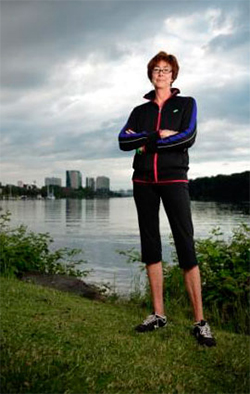
"I won," Susan Hassett triumphantly declares. "Three months into recovery from a heart transplant, and I can say with confidence that I won." Susan's battle with Hypertrophic Cardiomyopathy, a life-threatening genetic heart disease, took a toll not only on her own health, but has also plagued members of her family. She was diagnosed only three months before her brother passed away from the same disease while waiting for a heart transplant. Throughout her multi-layered and complex experience, Susan's resilience and strength have been truly unfailing. "I fought against this heart disease the only way I knew how – with my brother's optimism, and through opportunities to educate the public about the pressing need for organ, eye and tissue donation," she says. Susan's personal fight against Hypertrophic Cardiomyopathy has finally ended, thanks to one individual who registered as an organ donor. While an entirely new journey of post-transplant recovery has begun, Susan's wisdom and strength continue to grow and inspire those around her.
Contact Us
Clinical Transplant Services - Heart
3181 SW Sam Jackson Park Road, CB569
Portland, OR 97239
Phone: 503-494-8500 or 800 452-1369 extension 48500
Fax: 503-494-5049
Learn More
Patient Stories:
Vanessa Trotter
Duane Richards
John Masson
Our Providers
-
- Nalini Colaco, M.D., Ph.D.
- Cardiology, Heart Assist Devices and Heart Failure Portland
- Accepting new patients
-
- Caryn Epstein, M.S.P.H., M.S.H.S., PA-C (she/her)
- Physician Assistant
- Portland
-
- Conrad Macon, M.D.
- Cardiology, Internal Medicine and Heart Failure and Transplant Portland
- Accepting new patients
-
- Luke Masha, M.D., M.P.H.
- Cardiology, Heart Assist Devices and Heart Failure Portland
- Accepting new patients
-
- Nathan Samuel, D.N.P., AGACNP-BC
- Nurse Practitioner
- Cardiology, Heart Failure and Heart Transplant Portland
-
- Howard K. Song, M.D., Ph.D.
- Professor and Head of Division of Cardiothoracic Surgery
- Cardiology, Cardiothoracic Surgery and Aortic Surgery Portland
- Accepting new patients
- Knight Cardiovascular Institute Clinical Trials
-
- Johannes Steiner, M.D.
- Medical Director, Mechanical Circulatory Support
- Cardiology, Cardiac Imaging and Heart Assist Devices Portland
- Accepting new patients
-
- Frederick A. Tibayan, M.D. (he/him)
- Professor of Surgery
- Cardiothoracic Surgery, Cardiology and Aortic Surgery Portland
- Accepting new patients
- Knight Cardiovascular Institute Clinical Trials