Research Benefits
Over the past century, medical science has created vaccines for polio, smallpox, mumps, and measles. We have discovered new treatments for infertility, heart disease, and diabetes. Our progress in combating leading killers such as HIV, lung disease, and cancer has accelerated. Through stem cell research, we have gained new insights that have the power to transform our understanding of human health and biotechnology. Without animal research, these breakthroughs would never have occurred. The Foundation for Biomedical Research's website details the biomedical advances in human and animal healthcare.
Less than five percent of animals used in research are primates, and numerous government agencies and other organizations ensure that testing is humane and efficient. At the ONPRC, we hold ourselves to the highest standards of animal treatment. Our research on primates is vital to our understanding of human health and disease, and we have created models that revolutionize the way we conduct experiments and treat life-threatening disorders.
Primates share 98 percent of their genes with humans. Their body composition, maturation, and reproductive processes are virtually identical to ours, giving us the unique ability to safely evaluate and test treatments that can dramatically improve human health. ONPRC researchers use these NHP models to deepen our understanding of disease and immunology—accelerating discovery and reducing the time it takes to bring new treatments, cures, and vaccines to fruition.
-
Aging: Unlocking the secrets to a long and healthy life.
Over the past century, the average life expectancy of Americans increased by three decades. Forecasters predict that, by 2050, the elderly population will outnumber younger people for the first time in history. This rise in our aging population is placing an increasing demand on our health care system—driving scientists to rapidly develop new treatments for age-related conditions like osteoporosis, cancer and Alzheimer’s disease.
Because of their genetic similarity to humans, ONPRC scientists use rhesus macaques to explore the effects of aging. With the care and attention given to our primates—which rarely survive into old age in the wild—we can extend their lifespan beyond thirty years. This lets us closely examine the causes of normal and pathological aging and leads us into creating new cures and therapies.
We’ve developed new, non-invasive technologies like bone densitometry, magnetic resonance imaging, diffusion imaging, positron emission tomography, and remote activity measurements to let us closely monitor changes in cognition, sleep, behavior and other physiological functions. We are discovering how hormones can aid in cognitive and emotional health, and how neuroinflammation is linked to cognitive decline. Our latest studies are helping us understand how diet modification can help hinder age-related declines in immune function, learning and memory.
Our cross-disciplinary approach ensures that we are making the most effective use of our valuable animal resources and gives us the ability to reveal the important interrelated mechanisms that underlie human aging. Through our research, we hope to redefine “old age” and enable everyone to lead long, healthy lives.
-
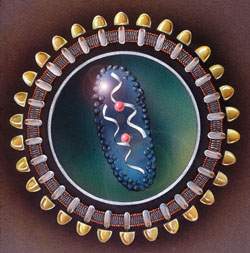
Stopping the HIV epidemic remains one of the top global health priorities. Since the beginning of the epidemic, the World Health Organization (WHO) estimates that more than 70 million people have been infected with HIV and about 35 million people have died. At the end of 2017, an estimated 36.9 million people were living with HIV due to continued new infections and individuals living longer due to greater access to antiretroviral treatment. Highly active antiretroviral therapy (HAART) limits HIV replication, which subsequently improves health and prolongs the life of HIV-infected individuals. However, HAART is not curative and does not eliminate the virus from the body. HAART cessation is invariably followed by rapid recrudescence of viral replication and progression to AIDS in all but the rarest of cases. Thus, HAART requires lifelong adherence, which many patients find challenging due to side effects, need for strict adherence, resistance, stigma and cost. Because of these limitations, a safe and effective vaccine remains the best hope of controlling the HIV epidemic.
Rhesus macaques develop a disease that closely mimics human acquired immunodeficiency syndrome (AIDS) when infected by simian immunodeficiency virus (SIV) or chimeric simian-human immunodeficiency viruses (SHIV), and represents the best animal model for HIV infection. Given the remarkable similarity of the immune systems of macaques and humans, preclinical vaccine development is heavily dependent on the SIV and SHIV macaque models.
At the ONPRC, we study the immune response to HIV infection using these valuable animal models. Scientists at the Center are at the forefront of those discoveries, learning how both antibodies and killer T cells contribute to control and how these immune responses might be best generated by vaccination. Although a fully effective vaccine is still years away, we are making great strides toward defining the kinds of vaccines that can work to help control or prevent infection.
In addition to HIV vaccine development, a curative approach for HIV infection is now recognized as both a necessary and attainable goal. Indeed, the International AIDS Society Working Group on HIV Cure recently set forth seven key scientific priorities for HIV cure research, one of which was the identification of anatomical and cellular sources of viral persistence in physiologically relevant animal models such as SIV-infected rhesus macaques. At the ONPRC, we are answering this call by defining viral reservoirs during HAART and designing novel approaches to eradicate the virus.
-
Infectious diseases in the 21st century
The World Health Organization (WHO) estimates that infectious disease is responsible for 20% of all deaths worldwide and that this number is likely to be even larger if certain cancers, cardiovascular and respiratory/ digestive deaths, which can also be attributed to infection, are included. Interestingly, six diseases account for 90% of infectious disease deaths, and include acute respiratory infections (including pneumonia and influenza), AIDS and AIDS-associated disease, diarrheal diseases, tuberculosis, malaria and measles.
To curb these growing global problems, further elucidation of host-pathogen interactions is absolutely needed to better design therapeutics and vaccines to prevent morbidity and mortality from existing and newly emerging infectious pathogens. Commensurate with this need is the absolute requirement for animal models that parallel and share developmental, physiological and evolutionary relationships with humans, and are susceptible to the same or closely related infectious agents with similar, if not identical, disease sequelae.
Research within the Division of Pathobiology and Immunology is focused on tackling key infectious and chronic diseases that afflict mankind, and include an emphasis on:
A. NHP Infectious and Chronic Disease Model and Assay Development
a. Allogeneic hematopoietic stem cell transplantation (HSCT) model
b. HBV model
c. IBD model
B. AIDS Pathogenesis, Persistence and Vaccine Development
a. RhCMV-SIV vaccine
b. Mechanisms of chronic inflammation/immune activation
c. Host-pathogen interactions
d. HIV cure
e. Adjunctive therapeutic interventions
C. Cytomegalovirus (CMV) Research Program
a. RhCMV-Mtb vaccine
b. RhCMV-Malaria vaccine
D. Models of Emerging Infectious Diseases
a. Zika virus (ZIKV) model
b. Anti-viral drug development
c. Chikungunya virus (CHIKV) model
-
Assessing the risk and consequences of addiction.
Our research program addresses alcohol and nicotine addiction, factors in two of the three leading causes of preventable death in the USA, and recently initiated studies on fetal effects of cannabinoid exposure. The program utilizes the propensity of NHPs to self-administer psychoactive substances in a repeated manner that recapitulates addictive disorders in humans. Our program is organized to identify key endocrine aspects of the risk for heavy alcohol drinking, particularly as related to the stress-axis response, menstrual cycle quality and immune system regulation. We can identify the specific brain changes associated with the transition from low and moderate use of a psychoactive substance (alcohol, nicotine, cannabinoids) to the development of dependence. We also explore a genetic basis of alcohol and nicotine use disorders by focusing on epigenetic changes to genes involved in sensory and cognitive processes. Our program is able to assess the effects of in utero exposure to alcohol, cannabinoids and nicotine on fetal brain growth using the ONPRC in vivo MRI atlas of the rhesus monkey fetal brain. Finally, we are able to test interventions that may decrease excessive alcohol drinking including a successful gene therapy approach to upregulated dopamine transmission in brain reward pathways.
Exposure rates of alcohol, nicotine or cannabinoids are unknown however, it is estimated that the about 1 to 5 per 100 school children (or 1% to 5% of the population) in the United States and some Western European have fetal alcohol exposure ). This figure continues to rise, and with it, the tragic effects. With recent trends in legalization, there is a growing and unknown consequence of in utero exposure to cannabinoids and marijuana. Perhaps we can’t prevent maternal substance abuse. But we can help protect the children who suffer the consequences. Scientists at ONPRC are leading the way in developing technologies that combat both the addiction and the negative effects of maternal addiction on their infants. We have created models that reproduce the changes in fetal brain and lung development seen in affected human infants. Our discoveries have led to new therapeutic approaches that lessen effects of maternal drug use on the unborn.
-
Obesity and diabetes are twin epidemics with global impact on public health.
Obesity is a serious and chronic disease of adults and children that continues to increase in prevalence. Currently, 7 out of 10 adults in the US are overweight, and 4 out of 10 are obese, and. Obesity is a significant risk factor for the development of type 2 diabetes and both obesity and type 2 diabetes increase the risk for fatty liver disease, heart disease, immune disorders, renal failure, and cancer. Once thought to be a problem mainly of the developed world, the rate of obesity in Africa is now greater than that of undernutrition, which will increase the risk of associated metabolic disease. Of particular concern is the significant increase in childhood obesity, with 1 in 5 children under 18 in the US being obese.
The modern diet, high in saturated fat and sugars, combined with a decrease in physical activity, are leading contributors to these severe metabolic conditions. The over-consumption of energy-dense foods leads to an increase in adipose tissue, resulting in insulin resistance, metabolic syndrome, and type 2 diabetes. Once these conditions arise, they are difficult, if not impossible, to reverse.
ONPRC scientists have developed an experimental model of diet-induced obesity in rhesus macaques that allows us to investigate the full spectrum of obesity-related complications and to develop interventions and treatments. With this innovative model, ONPRC scientists and their collaborators in the US and abroad can address important aspects of the pathology of obesity, including how obesity progresses to type 2 diabetes, the early signs of cardiovascular disease in obese people, and how obesity during pregnancy poses a risk for developing childhood obesity.
-
Improving fertility and pregnancy outcomes, preventing unwanted conceptions, and treating reproductive disorders.
More than eight billion people populate the planet, millions of who lack access to adequate health care. Resources in developing countries are becoming scarcer, leading to increased malnutrition, child morbidity/mortality, and the spread of disease across populations. In industrialized nations, infertility is continuing to rise, while biodiversity is shrinking at an alarming rate due to climate change and other environmental insults. The reproductive health status of an individual is predictive of future risk for developing chronic, life-threatening conditions, including cancer, diabetes, cardiovascular disease, and metabolic dysfunction. Pregnancy itself can have significant health risks for both the mother and fetus, with a possibility of early pregnancy loss/miscarriage, preterm labor, preeclampsia, maternal death, or stillbirth. Environmental factors such as maternal diet, drug use, chemicals/toxins, and infectious agents can alter fetal and placental growth and development, impacting postnatal life into adulthood and further increasing the risk for cognitive dysfunction, hypertension, diabetes, obesity, and renal disease. Thus, it is no wonder that the long-term health consequences of infertility and other reproductive disorders, as well as the proper development and well-being of potential offspring, are primary global concerns.
To address these urgent reproductive health issues, clinically relevant models that recapitulate the molecular mechanisms controlling reproduction and development in humans are required. Both women and Old-World nonhuman primates (NHPs) are monovular species, forming only one oocyte-containing mature follicle per month, and experience menstrual cycles of the same length. Signals for maternal recognition of pregnancy, fetal-placental structure/function, and gestation length are similar between NHPs and women as well. A longer reproductive lifespan and similar endocrine and metabolic characteristics makes NHPs also more likely to respond to environmental influences in a manner comparable to humans. By leveraging these similarities, scientists at ONPRC perform state-of-the-art basic and applied NHP research that spans the continuum of reproductive processes. Specifically, we are pioneering ways in which we can treat infertility in relation to reproductive aging, improve in vitro fertilization (IVF) success, and create safer, more effective non-hormonal contraceptives to protect against unintended pregnancy. We are further advancing assisted reproductive technologies (ARTs) that will enable couples to overcome infertility and developing early detection strategies for preventing or alleviating pregnancy-related diseases in both the mother and baby. There are also efforts to produce robust, reproducible methods for ovarian tissue cryopreservation and transplantation as options for female fertility preservation in survivors of cancer wherein ovarian function is compromised. Using advanced imaging and novel delivery techniques, we are implementing strategies to non-invasively detect and treat endometriosis and other reproductive pathologies and leveraging ARTs to create new models of human diseases through gene editing. Our heightened understanding of reproductive and developmental processes also helps conservationists create new contraceptive and breeding strategies to preserve endangered species on the brink of extinction.
Research in reproduction and developmental biology has been one of the primary missions of ONPRC for over 50 years, the findings from which are directly relevant to women’s health and their offspring. Our continued success in this area largely derives from integrating the study of primate anatomy and physiology in the whole-individual and at the tissue, cellular, and molecular level. Additional advances in the reproductive and developmental sciences takes us one step closer to finding treatments and cures for some of the most common human diseases and improving the lives of people worldwide.