Advancing health and policy through data-driven research
At the Center for Health Systems Effectiveness (CHSE), we bridge data and policy to improve health outcomes and access, with a focus on Medicaid and equity. Our research drives actionable solutions that help policymakers and health care leaders make informed decisions.
CHSE is nationally recognized for Medicaid policy expertise. We leverage the national Transformed Medicaid Statistical Information System (T-MSIS) Analytic Files (TAF) dataset and additional state Medicaid claims data to produce rigorous, policy-relevant research. By linking Medicaid claims with data on births, deaths, child welfare, incarceration, psychiatric hospital stays and climate indicators, we reveal intersections between health, social systems, and the environment — and opportunities for positive change.
Our research areas

State Medicaid & public program innovation
Under Section 1115 of the Social Security Act, states can test new approaches to improve Medicaid. CHSE serves as the independent evaluator for 1115 demonstration waivers in Oregon and Washington and for other state-level policy innovations, assessing whether these innovations improve access, quality and outcomes.

Behavioral health
We evaluate strategies to strengthen behavioral health systems for Medicaid enrollees — including workforce shortages, access gaps (especially for communities of color and Tribal communities), and integration with physical health care.

Care for older adults
As the population ages, policymakers are seeing smarter ways to serve older adults. We study programs that help seniors remain independent and strengthen Medicaid coordination as care needs grow more complex.

Reproductive & maternal health
Medicaid is the largest payer of maternity and contraceptive care in the U.S. Using national Medicaid data, we examine how state policies shape access to and use of effective contraception and maternal health services.
Our experts

K. John McConnell, Ph.D., M.S., M.A., CHSE Director
K. John McConnell, a health economist, founded CHSE in the OHSU School of Medicine Department of Emergency Medicine in 2011. His research focuses on state health policy, behavioral health, and quality improvement.

Hyunjee Kim, Ph.D., CHSE faculty member
CHSE evaluates new models to better coordinate care for low-income adults covered by both Medicare and Medicaid—from care that makes it possible for more people to live at home to care in nursing homes.

Stephan Lindner, Ph.D., CHSE faculty member
States increasingly use Medicaid Section 1115 waivers to test new approaches to coverage, care delivery, and payment reform. CHSE partners with states to evaluate these innovations — examining how waiver policies affect health care access, quality and outcomes.

Jane Zhu, M.D., M.P.P., M.S.H.P., affiliated faculty member
CHSE tests the impact of Medicaid policies on access to mental health and substance use treatment and explores the intersection of behavioral health and the criminal justice system.
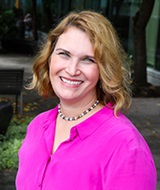
Maria Rodriguez, M.D., M.P.H., affiliated faculty member
CHSE is engaged in multiple studies of policies aimed at extending coverage for prenatal and postpartum care, expanding access to contraceptive services and integrating behavioral and maternal health care to improve outcomes for parents and infants.
Upcoming events
Connect with us
Physical address:
3030 S. Moody Avenue
Portland, Oregon, 97201
Information: CHSE-info@ohsu.edu
Media Relations: news@ohsu.edu
Subscribe to our quarterly newsletter and follow us on LinkedIn!