Scoliosis
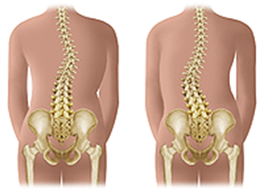
Scoliosis causes the spine to curve sideways, often in an S or C shape. In some cases, the spine rotates, making one shoulder blade stick out farther than the other. Scoliosis can affect the thoracic (mid-back) and lumbar (lower back) spine. Scoliosis has two main categories, nonstructural or structural.
Symptoms
- Difference in shoulder height
- Head is not centered on the body
- Uneven hips or shoulders
- Difference in how the arms hang
- When bending forward, the sides of the back appear different in height
- Spine curves more to one side
- Tired feeling in the spine after sitting or standing for a long time
- Backache or low-back pain
Nonsurgical treatments
- Bracing: This is an option if the spine is still growing. The type of brace varies with severity.
- Physical therapy: OHSU offers a therapist certified in the Schroth Method for scoliosis. This technique can stabilize your curve and lower the chances of needing surgery.
- Monitoring: We offer the EOS Imaging System, one of only two in Oregon, to measure a curve over time with better images and less radiation.
Surgical treatments
Surgery may be recommended if other treatments don’t slow the progression of the spinal curve. Some who didn’t need surgery as a child may find they need it as an adult. Others who had surgery as children may find that the untreated area grew worse, requiring a second surgery.
- Scoliosis surgery: Surgeons attach tiny metal hooks or screws to the spine and connect them to small rods to straighten the spinal curve.
- Spinal fusion surgery: This procedure, in which two or more spinal bones (vertebrae) are permanently joined for stability, may be recommended for an adult with degenerative scoliosis.
Pediatric patients
Read about scoliosis in children and the comprehensive care for this condition at OHSU Doernbecher Children's Hospital.