Sports and Recreation Safety
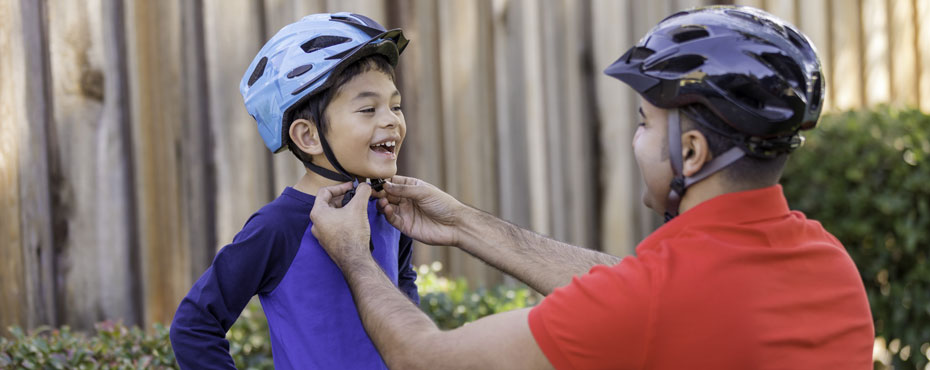
Physical activity is important to a child’s development. Being safe is important, too. More than 3 million children ages 5 to 14 are injured each year during sports or recreation, research shows.
Whether your kids are playing organized sports or playing with friends at a park, you can help keep them safe. This page has tips for:
- Proper supervision, including teaching your child to play the right way
- The right equipment for every activity
- Precautions
Sports precautions
If your children play organized sports, you can do the following.
Preparation
- Take your child to a doctor for an exam and injury risk-assessment before they start.
- Teach them ways to stretch and strengthen.
- If outdoors, have your child wear sweat- and water-resistant sunscreen with an SPF of at least 15.
- Check that coaches have proper qualifications and training.
- Tell coaches about any medical conditions your child has.
During play
- Make sure water or sports drinks are available at games and practices.
- Make sure your child is having fun. Too much emphasis on winning may cause kids to push too hard and get hurt.
Injuries
- Make sure a person certified in CPR and first aid is at all games and practices.
- Encourage your child to report injuries and not play through pain.
- Make sure your child warms up and cools down properly.
- Know RICE – Rest, Ice, Compress and Elevate. This works for most minor sprains and strains.
Baseball and softball
Protective equipment is important. Also watch for injuries from overuse, particularly to the shoulder and elbow.
-
- Have your child use safety equipment, including batting helmets, catcher’s gear, athletic supporters/cups and protective eyewear if they have glasses or contacts.
- Have your child wear cleats.
- Make sure bats, balls, gloves and safety gear are in good condition.
-
Your child should:
- Play with children of the same skill level, physical maturity and weight.
- Be taught to play the right way, especially when batting, pitching and sliding.
- Learn proper ways to throw, such as releasing the ball after the arm passes the head, using a smooth motion and keeping the eyes on the target.
-
- Clear the field of debris, and make sure it has no holes.
Basketball
Basketball may not be considered a collision sport, but it accounts for a high percentage of injuries in youth sports. Most are minor.
-
Basketball injuries are:
- Most often sprains and strains, usually to the ankle and knee.
- Often to the eyes, after being hit with fingers or elbows.
- More likely to occur during practice.
- More common, and often more serious, in girls.
-
Be sure your child wears required safety equipment in practices and games, including:
- Mouth guards, especially if your child has braces.
- Sports eyewear if your child wears glasses.
- An athletic supporter for boys.
-
- Talk to the coach about proper techniques, rules and injury risks.
- Inspect the court and nearby areas for hazards and damage.
Bicycles
Hundreds of thousands of children are treated in emergency rooms every year for bicycle-related injuries. A helmet, a well-maintained bike and knowing the rules of the road make riding safer. See our downloadable flyers on helmet and bike safety.
Low-cost helmets: Available at the Tom Sargent Safety Center in the OHSU Doernbecher Children’s Hospital lobby.
-
Oregon law requires children 15 and younger to wear a helmet when riding on skateboards, scooters and in-line skates in public. That includes streets, sidewalks, parking lots and skate parks.
Always wear a helmet – no matter your age. It should be approved by the American National Standards Institute (ANSI), the SNELL Memorial Foundation or the American Society for Testing Materials (ASTM).
Proper fit: Straps should fit so that only one finger fits between the chin and strap. Make sure the V-shaped straps surround the ears and the helmet covers the forehead. Helmets should not move when the head does.
Replace helmets: Get a new one every five years, or as often as your child outgrows it. Replace any helmet involved in an accident, even if you can’t see any damage.
Helmet-fitting instructions:
-
Teach your child safe riding practices, including:
- Don’t ride at night. If you must, use a headlight, taillight and pedal reflectors. Wear bright, reflective clothing.
- Check bicycles regularly to make sure they work properly.
- Obey all traffic laws, including stop signs, yield signs and traffic lights.
- Follow bicycle traffic rules such as:
- Always ride on the right side of the road.
- Always ride in the same direction as traffic.
- Use proper hand signals to alert cars, cyclists and pedestrians that you intend to turn.
- On curves, ride in single file, slow down and stay to the side.
- At intersections, obey traffic signals and walk your bike across.
- Never ride between cars, moving or parked.
- Never ride out from a driveway or hillside.
Cheerleading
Cheerleading is more rigorous than many parents may realize. To help prevent injuries:
- Have your child practice or perform only when supervised by the coach.
- Make sure your child is fully trained for each stunt and technique.
- Read the American Association of Cheerleading Coaches and Advisors’ safety guidelines and the National Federation of State High School Associations’ Spirit Rule Book.
Football
Most football injuries aren’t serious — nine in 10 do not require surgery, one national study shows. But parents and coaches should be alert to concussion symptoms, persistent knee pain and other injuries that may have lasting effects.
-
Necessary equipment includes:
- Helmets
- Shoulder pads, hip pads, tail pads and knee pads
- Pants (one-piece or shell)
- Thigh guards
- Athletic supporter
- Mouth guard with keeper strap
- Sneakers, or shoes with nondetachable rubber cleats; detachable soft cleats are allowed in some leagues
- Approved eyeglasses with nonshattering safety lenses, if they must wear glasses
-
- Make sure your child is in proper physical condition to play football.
- Encourage your child not to use steroids.
- Teach your child the rules.
- Encourage your child to let the coach know when he is hurt.
Hockey
Most hockey injuries result from body checking, the Centers for Disease Control and Prevention says. Sprains, bruises, fractures, facial cuts and head injuries are the most common. Safety gear and special playing rules for children can reduce injuries.
The American Academy of Pediatrics recommends no body checking for children 15 and younger.
-
Helmets:
- The helmet should be foam-lined and designed for hockey.
- Replace it if it has taken significant blows.
- Never buy a used helmet.
- Make sure it fits snugly; check the straps often.
Other gear:
- Equipment should fit properly and allow freedom of movement.
- Check gear regularly for wear and tear.
- A full face mask is required. They should have no scratches, cracks or broken wires.
- Insist your child use a mouth guard.
- Shoulder, chest, elbow, leg, knee and shin pads, padded gloves and groin protection should be worn.
- Skates should fit your child to provide ankle protection.
- Remember the hockey stick “chin rule”: With ice skates on and the stick resting on the end of its blade, the butt should be three inches below the chin.
Goalies:
- Goalies need special gear, including oversized leg and chest pads, a blocker, a catching mitt and a helmet with a mask that can deflect shots.
-
- Teach your child good sportsmanship. This reduces injury and penalty rates.
- Before games and practices, check the ice, goal net and arena for damage or hazards.
- Make sure your child learns and practices how to fall properly.
- Teach your child: “Heads up! Don’t duck!” for all collisions. Players should learn to make board contact with anything other than their heads.
- Read USA Hockey’s Heads Up Hockey brochure.
Scooters, skates and skateboards
At least four in five injuries on scooters, skates and skateboards happen to kids younger than 15. More than 60 percent of such injuries could be prevented or lessened with protective gear, the Consumer Product Safety Commission estimates. We offer a downloadable flyer on skating, scooter and skateboard safety.
-
- Make your child wear safety gear at all times, including a helmet, wrist guards and elbow and knee pads.
- Make sure gear fits properly and doesn’t interfere with vision, movement or hearing.
- Check the equipment each time your child rides. Lock the handlebars and steering column in place. Check for loose, cracked or broken parts. Secure nuts and bolts.
-
Teach your child to:
- Ride on smooth, dry, paved surfaces.
- Avoid gravel, sand and dirt.
- Watch for wet or oily surfaces.
- Allow only one person at a time on a scooter or skateboard.
- Never ride on the street or busy sidewalks, and never at night.
- Never hitch a ride by holding onto a moving car.
- Obey city laws.
- Walk down steep hills.
-
- Supervise children 8 or younger.
- Make sure children know their capabilities and how to slow, turn and stop.
- Don’t let your child ride barefoot.
- Help children learn to fall by practicing on a soft surface such as grass. Teach them to:
- Roll with the fall.
- Relax. Don’t stiffen up.
- Land on the fleshy parts of the body.
- Not try to absorb the fall with their arms, where most fractures and dislocations happen.
Skiing and snowboarding
The most common skiing injuries are knee and ankle sprains and fractures. The most common snowboarding injuries are to the wrist, shoulder and head.
Many injuries happen because of loss of control. Skiers and snowboarders may go too fast or try a slope beyond their ability.
-
- Make sure your child is in good physical condition.
- Have your child take lessons from a professional instructor.
- Make sure your child knows how to handle a fall.
- Review safety tips with your child.
-
- Make sure your child’s skis or snowboard are in good condition and fit the child’s weight, size and skill.
- Make sure your child wears a helmet designed for skiing and snowboarding. Make sure it fits with minimal movement.
- Always replace the helmet if it has taken a big blow.
- Wrist guards and knee pads should be worn for snowboarding.
- Sunglasses and goggles will protect your child's eyes and improve vision.
- Have your child use sunscreen and lip balm, even on cloudy days.
-
Make sure your child dresses to stay warm and dry. Multiple light layers are best. Look for outerwear that is water- and wind-resistant. Be sure to include:
- Thermal underwear
- Ski pants (no jeans)
- Turtleneck
- Neck gaiter
- Sweater
- Vest
- Socks or sock liners
- Jacket
- Hat or headband
- Gloves
-
- Supervise children while they ski and snowboard.
- Check weather and snow conditions before starting out. Adjust as conditions change.
- Have your child study a map of the ski area and be familiar with the terrain and obstacles.
- Have your child ski and snowboard only in areas matching their ability.
- Begin the day with stretching and a few runs down easy slopes.
- Make sure your child drinks plenty of fluids and eats nutritious food throughout the day.
- Encourage children to take plenty of breaks and stop when they get tired.
-
Teach your child the code:
- Always stay in control, and be able to stop or avoid people or objects.
- People ahead of you have the right of way. It is your responsibility to avoid them.
- You must not stop where you obstruct a trail or are not visible from above.
- Whenever starting downhill or merging into a trail, look uphill and yield to others.
- Always use devices to help prevent runaway equipment.
- Observe all posted signs and warnings. Keep off closed trails and out of closed areas.
- Before using a lift, be able to load, ride and unload safely.
Soccer
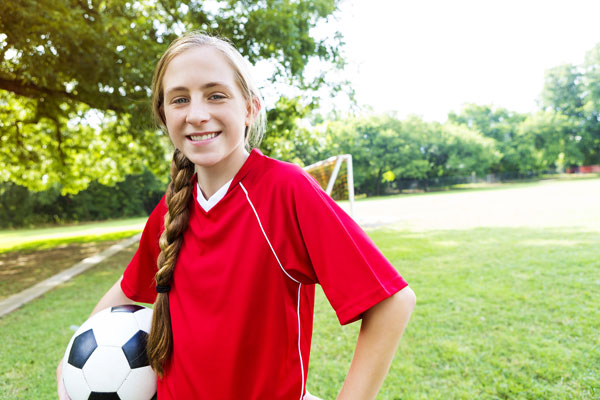
Almost 8 million children play soccer, making it the most popular youth sport behind basketball and baseball. While soccer may not be considered a collision sport, the most common injuries include broken bones, concussions, torn ligaments and sprains.
-
- Boys should wear an athletic cup, shin guards and soccer shoes.
- Girls should wear a chest protector, shin guards and soccer shoes.
- The goalie should add gloves.
- Check your child’s gear often to make sure it is in good condition and fits properly.
- Remove nets when goals are not in use.
- Tell your child never to climb on the net or goal framework.
- Make sure the goal is anchored and counterweighed. A movable soccer goal is more likely to tip.
-
- Have your child play with other children of the same skill level, physical maturity and weight.
- Make sure your child knows and plays by the rules.
- U.S. Soccer Federation guidelines prohibit headers by players 10 and younger and restrict headers to practice for players 11 to 13 years old. Find out what your child’s league allows.
- If your child is going to head the ball, teach proper technique: Look at the ball, plant your feet, bend your knees and lean back. Jump if the ball is high, move your head forward quickly, and strike the ball with the middle of your forehead.
-
- Check the field and surrounding area for debris, holes and other hazards.
- Make sure your child knows how to safely handle movable goals.
Learn more
The American Academy of Pediatrics offers additional information at healthychildren.org on:
Contact us
Location and hours
The Tom Sargent Safety Resource Center is in Doernbecher's main lobby.
Doernbecher Children’s Hospital
700 S.W. Campus Drive
Portland, OR 97239
Map and directions
Hours: 10 a.m. to 3:30 p.m. weekdays or by appointment.
Resources
Visit our Safety Resources page to find brochures you can download and links to safety products in our nonprofit store.
Presentation requests
Fill out a form to request a custom presentation: