Welcome to child and adolescent psychiatry
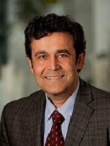
Meet Dr. Ajit Jetmalani, Director of Child & Adolescent Psychiatry at OHSU.
Listen to Dr. Ajit Jetmalani talk about kids returning to classrooms after the pandemic, on OPB Radio Think Out Loud
Watch Dr. Ajit Jetmalani, Dr. Keith Cheng, & Eric Hunter be honored for the mental health work they do for Oregon Families.
Watch a history of CAP and how the Division came to be in 1968.
The Division of Child and Adolescent Psychiatry exemplifies the three-part mission of OHSU: Healing, Teaching and Discovery.
Healing
The Child and Adolescent Psychiatry Outpatient Clinic, in OHSU’s Crossings Campus, Building B in downtown Portland, provides care and consultation for the full range of childhood mental health disorders. Dr. Paria Zarrinnegar is the Director of the Child and Adolescent Psychiatry Outpatient Clinic and Psychotherapy Training. Read Dr. Zarrinnegar's perspective on Child & Adolescent Anxiety Psychodynamic Psychotherapy: A Treatment Manual by Sabina E Preter, Theodore Shaprio, and Barbar Milrod (Eds.)
Teaching
The Division is highly involved in medical education for medical students, residents and fellows. Our teaching draws upon the many multi-disciplinary educational resources of OHSU and diverse health care environments in the community. Our Division is also home to OHSU’s Child and Adolescent Psychiatry fellowship. Listen to Dr. Craigan Usher, Training Director discuss how to talk to kids about politics, the pandemic and other difficult subjects on OPB Radio Think Out Loud. Click here to learn more about our fellowship program.
Discovery
Rebecca Marshall, MD, MPH is Associate Professor of the Child and Adolescent Psychiatry Division and the PI on a project called Crisis and Transition Services, which evaluates outcomes of a statewide program providing transitional services for youth who present to Emergency Departments in a mental health crisis. Dr. Marshall is co-developing a project called the Stay Safe App for Youth (STAY), an app for suicidal youth discharging from EDs and inpatient units, and the PI on a study evaluating ketamine treatment for adolescents with severe treatment-refractory depression. Dr. Marshall is also an advisor to a number of medical students, residents, and fellows on research projects.
Discover more research activities by visiting Child and Adolescent Psychiatry Research activities and the Research Division.