Critical Care Track
Dear Prospective Residents and Fellows,
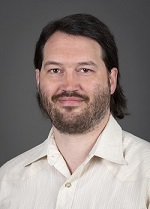
Thank you for your interest in learning more about the critical care training opportunities provided by OHSU’s Department of Anesthesiology and Perioperative Medicine. We offer two different paths to board certification in anesthesia, critical care medicine at a high acuity, quaternary care hospital with strong, anesthesiologist-led ICUs in a city diverse in culture, climate and lifestyle. My time at OHSU has been both stimulating and rewarding and I am excited to tell you more about our program.
Two roads diverged …
OHSU APOM offers a traditional track fellowship in Anesthesia/CCM open to physicians who have completed residency in Anesthesiology or Emergency Medicine. This program focuses on training, exemplary intensivists from those who come to us with an already strong skillset from their prior residency training. After orientation to working at OHSU, fellows are free to focus entirely on developing their sub-specialty knowledge and skills in our various learning environments.
Alternatively, for those few who are pursuing anesthesiology residency and also are sure that they are committed to further training in critical care medicine, we offer a combined 5-year program which, upon completion, affords the graduate the opportunity for board certification in both Anesthesiology and Critical Care Medicine. This style of integrating longitudinal training in CCM into core Anesthesiology residency was pioneered at OHSU and our long experience has resulted in a robust program that endeavors to support our budding intensivists professionally, financially and personally.
OHSU Critical Care
OHSU is a 576 bed quaternary care hospital with partner hospitals throughout the metro area and close ties to the neighboring VA Portland medical center. We are one of only two level one trauma centers in Oregon, with the next closest level one centers in Seattle, WA and the bay area of California. As such we serve a large and largely remote trauma population from Oregon, to southern Washington, northern California, Idaho, Montana and northern Nevada. Similarly, our neurocritical care service is a primary resource for most of these same areas. OHSU has, in conjunction with the Portland VA, a busy solid organ transplant service and is the only liver transplant center in Oregon. Our advanced heart failure program has grown dramatically in the last 5 years and now has a strong track record of mechanical circulatory support, ventricular assist device therapy and heart transplantation. Similarly our ECMO program has grown significantly and now provides VA and VV ECMO as well as mobile retrieval services to patients as far away as Alaska who require emergent support.
Fellowship Experience
Fellowship at OHSU is a demanding experience. OHSU regularly boasts one of the highest case mix indices among academic medical centers largely because, as we are a small hospital relative to our catchment area, and our strong triage system which can divert less critical patients to partner hospitals, our ICUs take care of the sickest of the sick. Fellows spend the majority of their ICU time in our cardiovascular ICU and neuroscience ICU, both of which are led and largely staffed by anesthesiologists. Fellows also rotate through OHSU’s trauma/surgical ICU as well as the medical ICU. These rotations afford a broader exposure to various pathologies as well as time in primary triage and teaching roles.
Fellows attend a broad range of didactic experiences, including weekly ICU focused lectures, monthly journal club with core didactic as well. We also work closely with the medicine and surgical critical care programs to offer cross specialty didactic experiences, including airway labs, high level ventilator management teaching and multi-day communication for challenging conversation workshops.
In addition, our fellows have the opportunity to choose several elective experiences throughout their training to develop specialized skills and knowledge. While there are always opportunities for fellows to create their own elective experiences, some of the more common and available choices include rotations in ECMO, echocardiography, infectious disease, transfusion medicine, palliative care as well as repeat rotations through MICU or TSICU. In the near future we hope to offer virtual ICU and community ICU elective for those interested.
Finally, I would be remiss if I did not comment on the quality of our ICU attendings and teachers. OHSU fosters a collegial workplace and the APOM ICU fellowship in particular is fortunate to have a group of attending physicians who are excellent clinicians, educators and human beings.
Portland
Most of what you may have heard about Portland is true, in a good way. Portland is the major metropolitan area of northern Oregon and as such offers the kind of culinary, entertainment and cultural opportunities often only found in larger, denser cities. Within its city limits Portland boasts the 29th most green space per capita of any city in the country. Scenic beaches, glaciated peaks with ski areas, rivers, waterfalls and more than a lifetime's worth of trails lie within a short drive. Portland’s professional sports teams are regularly competitive in their various leagues and there are countless recreational league opportunities for those interested. Arts and cultural events abound and the food and beverage scene in Portland is appropriately renowned. These make Portland an ideal setting to spend a few years of training or the rest of a lifetime.
Again, I thank you for taking the time to learn more about what OHSU APOM offers physicians interested in critical care training. Choosing a training program is a nuanced and personal experience and as such, if ever there are other questions or considerations that arise, our education team are more than happy to address these to the best of our ability.
Nate Murray, M.D.
murrayn@ohsu.edu
APOM OSP CCM Chief