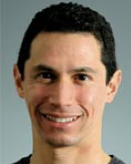
Todd Leen's Home page
Todd K. Leen, Professor
Department of Biomedical Engineering
Phone: 503 748-1160
Fax: 503 748-1306
Curriculum vitae
Return to BME Faculty Profile
Research Interests
My research in machine learning includes theory and algorithm synthesis, with applications to signal processing, fault detection and prediction in regimes from health care to complex environmental systems.
Starting August 12, 2012, Todd Leen will be at the National Science Foundation serving as Program Director for Robust Intelligence in the Information and Intelligent Systems Division within the Computer Science and Engineering Directorate.
Robustly Detecting Clinical Laboratory Errors
Funded by NSF
Todd Leen, Deniz Erdogmus (Co-PI), Steven Kazmierczac (acting PI)
Hospital clinical laboratory tests are a major source of medical information used to diagnose, treat, and monitor patients. Such test errors lead to delays, additional expense, clinical evaluation and sometimes to erroneous treatments that increase risk to patients. Such errors compromise clinical utility, cost effectiveness and patient safety. One recent study suggests that errors in measured total blood calcium concentration due to instrument mis-calibration alone cost from $60M to $199M annually in the US.; as noted below, the bulk of errors do not originate in instrument mis-calibration.
Clinical laboratory errors affect about 0.5% of samples collected. Of those, approximately 75% of clinical laboratory test errors originate during sample collection, transport, and storage — jointly called the pre-analytic phase — before samples reach the analysis instruments. However the quality control measures standard in hospital clinical test labs only monitor instrument calibration to fiducial test materials. They are therefore completely blind to sample faults introduced in the pre-analytic phase, where most errors originate.
Data derived from patient samples, rather than instrumentation calibration checks, holds the key to detect faults introduced in the pre-analytic phase. Attempts to date to use such information are primitive and grossly insufficient. Current methods are either so insensitive to errors that they do not detect sample faults reliably, or they routinely flag normal samples as being faulty.
This project develops and uses statistical machine learning technology to reliably detect errors in hospital clinical laboratory tests, using data derived from patient samples. In a preliminary study, the PI showed that multi-variate statistical models of lab tests revealed errors that existing techniques missed. The primary obstacle to developing reliable statistical detectors for lab errors is the cost of labeling samples combined with the low error rate. Developing and evaluating any automated error-detection algorithm requires a sufficient number of samples, both faulty and non-faulty. Determining which tests are faulty requires review of the tests and other patient data (e.g. charts) by a clinical lab expert— a time-consuming and economically unfeasible prospect given the low fault rate. The project addresses this challenge through active learning paradigms used to select, with emphasis on rare classes, subsets of the data for labeling by human experts. The project focuses on chronic kidney disease because of its medical importance and large data repository at the PI’s institution. This research will provide algorithms for clinical lab error detection that will extend to tests used in other disease entities (for example diabetes and heart failure).
Ultimately, the error-detection algorithms developed from this research will make their way into clinical laboratory information systems and further into commercialization and thus deployment on a scale significant enough to have widespread positive impact on laboratory costs patient risk.
Stochastic Learning Dynamics
Click here for Software packageFunded by NSF
Todd Leen
The discovery that synaptic plasticity is mediated by processes sensitive to the precise relative timing of pre- and post-synaptic events overturned models of synaptic change based on average activity levels (so-called rate-dependent models). The discovery of Spike-Timing-Dependent Plasticity (STDP) requires new theoretical tools for its description.
Individual STDP events have inherent random variability as well as variability from timing fluctuations due to circuit-level random factors. So computational synaptic dynamics in the new paradigm must be based in the theory of stochastic processes. Previous work modeling the stochastic dynamics STDP typically used the nonlinear Fokker-Planck equation (FPE) to approximate the intractable master equation governing the dynamics. Although often useful, the FPE is known to be deeply flawed and potentially misleading. The situation recalls the use of the FPE by machine learning theorists in the early to mid 1990s; the dynamics of both STDP and on-line, machine learning algorithms follow a Markov process described by a master equation. This project establishes rigorous tools for treating the stochastic dynamics of learning systems based on spike-timing-dependent synaptic plasticity. It develops well-grounded approximation techniques (and exact solutions where available) for probability distributions on the synaptic weights and their moments, and applies the new techniques to synaptic dynamics in natural and artificial learning systems. The new methods are compared to the FPE used in recent literature to provide insight into the accuracy and appropriateness of the various methods. The techniques are relevant not only to computational neuroscience and machine learning, but more broadly to regimes with Markov dynamics are described by a master equation --- potentially including state estimation, and the chemical master equation. The project provides software to the research community for computing distributions and moments using the new methods.
Computational Neuroscience
Dr. Pat Roberts (OHSU), Prof. Nathan Sawtell (Columbia University) and myself have a NIH/NSF Collaborative Research in Computational Neuroscience project on sensory-motor processing and memory in the mormyrid weakly electric fish. The fish have an electro-location system that uses the animal's electric organ discharge (EOD) to navigate, identify objects, and find prey. The electrosensory lateral line lobe (ELL) of the mormyrid brain integrates motor command, proprioceptive, and electrosensory information in a cerebellar-like structure. As part of its function, the ELL generates memories comprising the expected sensory signal from the fish's own electric discharge. These memories are adapted over time through spike-timing-dependent plasticity (STDP). The project integrates modeling and neurophysiology experiments to determine how realistic patterns of excitation are processed in ELL, and how plasticity is controlled by recurrent connections from higher centers. As part of the project, we are developing a novel computer-controlled stimulus system that provides precise control of the spatio-temporal profile of the electric images on the fish's skin.
Health Care Applications of Machine Learning
I collaborate with the OHSU Point of Care Laboratory (POCL) and with Jeff Kaye director of OHSU's Layton Aging & Alzheimer's Disease Center. My work with these colleagues is aimed at detecting behavioral changes that are predictive of emerging health problems, particularly cognitive decline. This work makes use of a number of novel unobstrusive in-home monitoring technologies to provide early detection of health-related changes.
Environmental Observation and Forecasting Systems
I've enjoyed a collaboration with Antonio Baptista and the OHSU Institute of Environmental Health NSF-STC Center for Coastal Margin Observation and Prediction. Our work on the CORIE project has improved reliability of measurements and modeling in the Columbia River estuary. We developed and deployed a system to detect biofouling of salinity sensors deployed in the estuary that cut data loss in half. We have applied learning technology as key elements in a (problem-portable) data assimilation (Bayesian model / data fusion) system. Ours is the first data assimilation system to operate successfully in a strongly non-linear river-estuarine-ocean system. Our novel model surrogates, trained to emulate the dynamics of extremely large (10^7 degrees of freedom) finite element hydronamics models, are a critical enabling technology for this work. The surrogates vastly accelerate the forward model evaluation by factors of one to twelve thousand, enabling a dramatic increase in ensemble prediction capability.
Selected Publications
- Statistical Error Detection for Clinical Laboratory Tests. Todd K. Leen, Deniz Erdogmus, and Steven Kazmierczak. IEEE Engineering in Medicine and Biology Conference, 2012.
- Approximating Distributions in Stochastic Learning. Todd K.Leen, Robert Friel, and David Nielsen. Neural Networks, 32, 219-228, 2012. Available online at http://www.sciencedirect.com/science/article/pii/S0893608012000354
- Stochastic Perturbation Methods for Spike-Timing-Dependent Plasticity. Todd K. Leen and Rober Friel. Neural Computation, 24, 5, 1109-1143, 2012.
- Perturbation Theory for Stochastic Learning Dynamics. Todd K. Leen and Robert Friel. Proceedings of IJCNN, 2011.
- Kernels for Data with Variable Sequence Lengths and Sampling Intervals. Zhengdong Lu and Todd K. Leen. Neural Computation, 23, 9, 2390-2420, Sept. 2011. We also made the cover.
- Anti-Hebbian Spike Timing Dependent Plasticity and Adaptive Sensory Processing (abstract, pdf). Patrick D. Roberts, Todd K. Leen. Frontiers in Computational Neuroscience, 4:156, DOI: 10.3389/.fn-com.2010.00156, 2010.
- Model-Based Inference of Cognitive Processes from Unobtrusive Gait Velocity Measurements. Daniel Austin, Todd K. Leen, Tamara Hayes, Jeffrey Kaye, Holly Jimison, Michael Pavel. IEEE Engineering in Medicine and Biology Conference, 2010.
- Compression of Line Spectral Frequency Parameters Using Asynchronous Interpolotion. Alex Kain and Todd K. Leen. Proceedings of the 7th ISCA Speech Synthesis Workshop, Kyoto, Japan, 2010.
- Mobile Therapy: Case Study Evaluations of a Cell Phone Application for Emotional Self-Awareness. Margaret E. Morris, Qusai Kathawala, Todd K. Leen, Farzin Guilak, William Deleeuw, Michael Labhard, Ethan E. Gorenstein. Journal of Medical Internet Research, 12, 2, e10, 2010.
- Fast Data Assimilation Using a Nonlinear Kalman Filter and a Model Surrogate: an Application to the Columbia River Estuary. S. Frolov, Z. Lu, R. van der Merwe, T. Leen, A. Bapista. Dynamics of Atmospheres and Oceans, 48, 16-45, 2009.
- A Study of Medication-Taking and Unobtrusive, Intelligent Reminding. T. Hayes, K. Cobbinah, T. Dishongh, J. Kaye, J. Kimel, M. Labhard, T. Leen, J. Lundell, U. Ozertem, M. Pavel, M. Philipose, K. Rhodes, S. Vurgun. Telemedicine and e-Health, DOI: 10.1089/tmj.2009.0033, October 2009.
- Hierarchical Fisher Kernels for Longitudinal Data. Zhengdong Lu, Todd K. Leen, and Jeffrey Kaye. Advances in Neural Information Processing Systems, 21, 2009.
- Pairwise Constraints as Priors in Probabilistic Clustering. Zhengdong Lu and Todd K. Leen. In Constrained Clustering: Advances in Algorithms, Theory, and Applications. Basu, Davidson, and Wagstaff (Eds.), Chapman & Hall / CRC, 2009.
- A Reproducing Kernel Hilbert Space Framework for Pairwise Time Series Distances. Z. Lu, T. Leen, Y. Huan, and Deniz Erdogmus. Proceedings of the 25th International Conference on Machine Learning, Helsinki, 2008.
- Detecting Mild Cognitive Loss with Continuous Monitoring of Medication Adherence. Y. Huang, D. Erdogmus, Z. Lu, and T.K. Leen. ICASSP 2008, IEEE.
- Fast Neural Network Surrogates for Very High Dimensional River-Estuary-Ocean Circulation Models. Rudolph van der Merwe, Todd K. Leen, Zhengdong Lu, Sergey Frolov, and Antonio Baptista. Neural Networks 20, 462-478, 2007.
- Penalized Probabilistic Clustering. Zhengdong Lu and Todd K. Leen. Neural Computation, 19, 1528-1567, 2007.
- Semi-supervised clustering with pairwise constraints: A discriminative approach. Zhengdong Lu and Todd K. Leen. Eleventh International Conference on Artificial Intelligence and Statistics, Puerto Rico, 2007.
- Reduction of multi-dimensional laboratory data to a two-dimensional plot: a novel technique for the identification of laboratory error. S. Kazmierczak, T.K. Leen, D. Erdogmus, and M. Carreira-Perpinan. Clin. Chem. Lab. Med., 45 (6), 749-752, 2007.
- Semi-supervised Learning with Penalized Probabalistic Clustering. Zhengdong Lu and Todd K. Leen. Advances in Neural Information Processing Systems 17, 2005.
- Random walks for spike-timing-dependent plasticity. Alan Williams, Todd Leen, and Pat Roberts, Physical Review E, 70, 021916, 2004.
- Parameterized Novelty Detection for Environmental Sensor Monitoring. Cynthia Archer, Todd Leen, Antonio Baptista. Advances in Neural Information Processing Systems 16 (2004).
- Stability of Negative-Image Equilibria in Spike-Timing-Dependent Plasticity. Alan Williams, Pat Roberts, and Todd K. Leen. Physical Review E, 68, 2003.
- A Generalized Lloyd-type Algorithm for Adaptive Transform Coder Design. Cythia Archer and Todd Leen. IEEE Transactions on Signal Processing, 52, 1, 255-264, 2004.
- Fault Detection for Salinity Sensors in the Columbia River Estuary. Cynthia Archer, Antonio Baptista, and Todd Leen. Water Resources Research, 39, 3, 19 March, 2003.
- Bayesian Sensor Image Fusion Using Local Linear Generative Models, Ravi K. Sharma, Todd K. Leen, and Misha Pavel. Optical Engineering, 40, 1364-1376, July, 2001.
- The Coding Optimal Transform, C. Archer and T. Leen. Data Compression Conference 2001, IEEE Computer Society Press, 2001.
- From Mixtures of Mixtures to Adaptive Transform Coding, C. Archer and T. Leen. In T. Leen, T. Dietterich, V. Tresp (eds.), Advances in Neural Information Processing Systems 13, The MIT Press, 2001.
- Adaptive Transform Coding as Constrained Vector Quantization, Cynthia Archer and Todd Leen, in Neural Networks for Signal Processing -- Proceedings of the IEEE Workshop, Sidney, 2000.
- Probabilistic Sensor Fusion, Ravi K. Sharma, T.K. Leen and Misha Pavel, in Advances in Neural Information Processing Systems 11, The MIT Press, 1999.
- Optimal Asymptotic Learning Rate - Macroscopic vs. Microscopic Dynamics, T. K. Leen, Bernhard Schottky, and David Saad, Physical Review E, 59, 985-991, 1999.
- A Fast Histogram-Based Postprocessor that Improves Posterior Probability Estimates, Wei Wei, Todd K. Leen, and Etienne Barnard, Neural Computation, 11, no. 5, 1999.
- Exact and Perturbation Solutions for the Ensemble Dynamics, T.K. Leen, in D. Saad (ed.), in Online Learning in Neural Networks The Newton Institute Series, Cambridge University Press, Cambridge, 1999.
- Optimal Dimension Reduction and Transform Coding with Mixture Principal Components, Cynthia Archer and Todd K. Leen, International Joint Conference on Neural Networks (IJCNN), IEEE, 1999.
- Multi-stream Video Fusion Using Local Principal Components Analysis, Ravi Sharma, Misha Pavel, and Todd K. Leen, in Infrared Technology and Applications XXIV, Proceedings of SPIE, vol. 3436, SPIE, 1998.
- Automatic Prediction of Trauma Registry Procedure Codes from Emergency Room Dictations, William R. Hersh, T.K. Leen, P. Steve Rehfuss, and Susan Malveau, MEDINFO 98, Seoul, South Korea, 1998.
- Two Approaches to Optimal Annealing, T.K. Leen, B. Schottky, and D. Saad, in M. Jordan, D. Kearns, and S. Solla (eds.), in Advances in Neural Information Processing Systems 10, The MIT Press, 1998.
- Dimension Reduction by Local Principal Component Analysis, N. Kambhatla and Todd K. Leen, Neural Computation, 9, 1493, 1997. (This paper was one of 21 articles selected for the collection Unsupervised Learning, Foundations of Neural Computation, Geoffrey Hinton and Terrence J. Sejnowski (eds), The MIT Press, 1999.)
- Stochastic Manhattan Learning: An Exact Time-Evolution Operator for the Ensemble Dynamics, T.K. Leen and John E. Moody, Physical Review E, 56, 1262, 1997.
- Using Curvature Information for Fast Stochastic Search, G.B. Orr and T.K. Leen, in M. Mozer, M. Jordan, and T. Petsche (eds.), in Advances in Neural Information Processing Systems 9, The MIT Press, 1997.
- Invariance and Regularization in Learning, T.K. Leen, in G. Tesauro, D. Touretzky, and T. Leen (eds.), in Advances in Neural Information Processing Systems 7, The MIT Press, 1995,
- Classification with Gaussian Mixtures and Clusters, N. Kambhatla and T.K. Leen, in G. Tesauro, D. Touretzky, and T. Leen (eds.), in Advances in Neural Information Processing Systems 7, The MIT Press, 1995.
- From Data Distributions to Regularization in Invariant Learning, Todd K. Leen, Neural Computation 7, 974, 1995.
- Fast Pruning Using Principal Components, A.U. Levin, T.K. Leen, and J.E. Moody, In J.D. Cowan, G.Tesauro, and J. Alspector (eds.), in Advances in Neural Information Processing Systems 6, Morgan Kauffman Publishers, 1994.
- Fast Non-Linear Dimension Reduction, T.K. Leen and Nandakishore Kambhatla, In J.D. Cowan, G.Tesauro, and J. Alspector (eds.), in Advances in Neural Information Processing Systems 6, Morgan Kauffman Publishers, 1994.
- Optimal Stochastic Search with Adaptive Momentum, T.K. Leen and Genevieve B. Orr, In J.D. Cowan, G.Tesauro, and J. Alspector (eds.), in Advances in Neural Information Processing Systems 6, Morgan Kauffman Publishers, 1994.
- Momentum and Optimal Stochastic Search, G.B. Orr and T.K. Leen, in Proceedings of the 1993 Connectionist Models Summer School, M.C. Mozer, P. Smolensky, D.S. Touretzky, J.L. Elman, and A.S. Weigend (eds.), Erlbaum Associates, 1993.
- Fast Nonlinear Dimension Reduction, N. Kambhatla and T.K. Leen, in IEEE International Conference on Neural Networks vol. 3, 1213-1218, IEEE, San Francisco, 1993.
- A Coordinate-Independent Center Manifold Reduction, Todd K. Leen, Physics Letters, A-174, 89, 1993.
- Weight-Space Probability Densities in Stochastic Learning: I. Dynamics and Equilibria, Todd K. Leen and John E. Moody, In Giles, Hanson and Cowan (eds.), Advances in Neural Information Processing Systems 5, Morgan Kaufmann Publishers, 1993.
- Weight-Space Probability Densities in Stochastic Learning: II. Transients and Basin-Hopping Times, G.B. Orr and T.K. Leen, In Giles, Hanson and Cowan (eds.), Advances in Neural Information Processing Systems 5, Morgan Kaufmann Publishers, 1993.
- Weight-Space Probability Densities and Convergence Times for Stochastic Learning, T.K. Leen and G.B. Orr, in International Joint Conference on Neural Networks Baltimore, 1992.
- Feature Selection for Improved Classification, F. Shaudys and T.K. Leen, in International Joint Conference on Neural Networks Baltimore, 1992.
- Weight-Space Densities in Stochastic Learning, T.K. Leen and G.B. Orr, in Proc. Canadian Conf. on Electrical and Computer Engineering, Toronto, Ontario, Sept. 1992.
- Learning in Linear Feature Networks, T.K. Leen, invited paper for Adaptive Signal Processing, SPIE Proceedings, 1565, 472-481, 1991.
- Dynamics of Learning in Linear Feature-Discovery Networks, Todd K. Leen, Network: Computation in Neural Systems, 2, 85, 1991.
- Dynamics of Learning in Recurrent Feature-Discovery Networks , Todd K. Leen, in Advances in Neural Information Processing Systems 3, Lippmann, Moody and Touretzky (eds.), Morgan Kaufmann, 1991 (short version of above article in Network).
- Encoding and Classification in a Model of Olfactory Cortex, T.K. Leen, Max Webb, and S. Rehfuss, International Joint Conference on Neural Networks Seattle, 1991.
- Hebbian Learning: Algorithms and Applications, T.K. Leen, in Proceedings of the 34th Annual Conference of the International Society for the Systems Sciences, Portland, OR, July, 1990.
- Weight Dynamics of Recurrent Hebbian Networks, T.K. Leen, in Proceedings of the 34th Annual Conference of the International Society for the Systems Sciences, Portland, OR, July, 1990.
- Hebbian Learning Improves Classifier Efficiency, T.K. Leen, M. Rudnick, and D. Hammerstrom, in International Joint Conference on Neural Networks, San Diego, 1990.
- Dynamics and Implementation of Self-Organizing Networks, D. Hammerstrom, T.K. Leen, and E. Means, in Advanced Neural Computers, R. Eckmiller (ed.), Elsevier Science Publishers B.V. (North-Holland), March, 1990.
- Speaker-Independent Vowel Recognition: Comparison of Backpropagation and Classification Trees, R.A. Cole, Y.K. Muthusamy, L. Atlas, T. Leen, and M. Rudnick, in Proceedings of the IEEE Hawaii International Conference on System Sciences, 1990.
- Speech Recognition, VLSI, and Neural Networks R. Cole, D. Hammerstrom, T. Leen, M. Gopalakrishnan, J. Inouye, E. Means, Y. Muthusamy, T. Rooker, and M. Rudnick, in Proceedings of NORTHOCON, 1989.
- Form and exploration of mechanical stability limits in erect stance, G. McCollum and T.K. Leen, Journal of Motor Behavior, 21, 255, 1989.
- Theory and practice of proximity correction by secondary exposure, Todd K. Leen, J. Appl. Physics, 65, 1776, 1989
- Renormalization and Scaling Behavior of non-Abelian Gauge Fields in Curved Spacetime, Todd K. Leen, Annals of Physics, 147, 417, 1983.
- Remote Quantum-mechanical Detection of Gravitational Radiation, Todd K. Leen, Leonard Parker, and L.O. Pimentel, General Relativity and Gravitation, 15, 761, 1983.