DMD Program
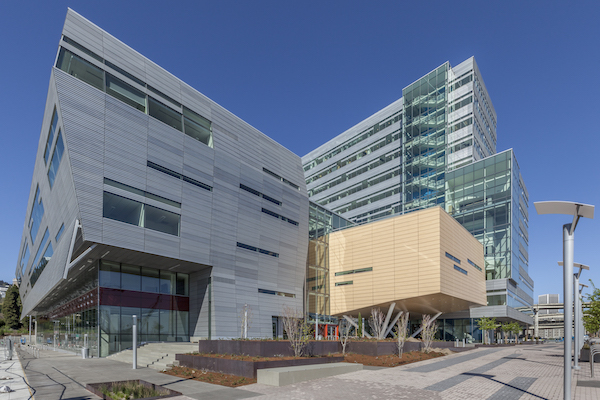
The Oregon Health & Science University School of Dentistry is a publicly supported institution located in Portland, a city of 610,000 residents in a greater metropolitan area of more than 2 million. The School of Dentistry is located in the Robertson Life Sciences Building, on the waterfront in South Portland. Paths for joggers, bicyclists and pedestrians connect the university with the heart of the city just one mile away.
The dental school was established in 1898, and the School of Dentistry became incorporated into the Oregon State System of Higher Education in 1945. Since 1974, the School of Dentistry has been part of the Oregon Health & Science University, an institution devoted to educating health professionals and biomedical researchers. OHSU dental students find friendly people who work together as a team toward one goal: providing each student with the best dental education available.
This link connects you with ADEA AADSAS, the American Dental Education Association’s common platform for applying to accredited dental schools around the country. There, you can also find more information about the application process or check the status of an existing application.

OHSU’s DMD program has earned an OHSU Provost Award for Excellence in Program Assessment. The program communicates measurable learning outcomes, reflects on targets not met, engages stakeholders at a high level and makes data-based changes.
The Dental Program
Degree awarded: DMD
Size of entering class: 75
Length of program: 47 months. First year students begin with a six-week summer term and complete a 12-week fall, spring and summer term and an 11-week winter term every year.
Curriculum: The dental curriculum prepares graduates for the practice of general dentistry. Emphasis is placed on the prevention of dental diseases as well as on technical, diagnostic, and treatment planning skills essential to treating patients.
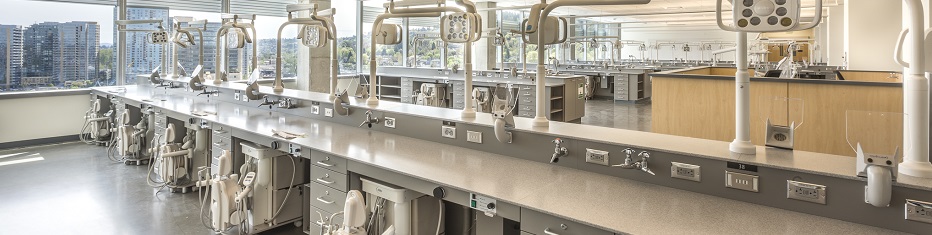
Students see their first patient during the fall quarter of their first year as part of a course dealing with the prevention of dental diseases. During the first two years there is some clinical experience, although most emphasis is placed on the biological sciences and preclinical techniques. The summer session between the second and third years focuses on clinical experience and oral pathology. The third and fourth years deal mostly (but not entirely) with clinical practice and include courses in practice planning and management. Honors clinical electives are offered in advanced restorative techniques, implantology and advanced education areas (e.g. endodontology, behavioral sciences). Development of ethical standards of practice, opportunities for community service, and elective courses augment the development of clinical skills.
The Doctor of Medicine in Dentistry: A Historical Perspective
In 1839, Drs. Horace Hayden and Chapin Harris of the Baltimore College of Medicine decided to redirect their efforts to establish a specialty department of dentistry at the medical school and instead founded the first separate School of Dentistry. This new school, the Baltimore College of Dental Surgery, granted the first Doctor of Dental Surgery degree, or DDS A few years later, Harvard, the first university to organize a dental school, changed the degree to Doctor of Dental Medicine, or DMD. Harvard renamed their degree because they viewed dentistry as a branch of medicine, not just surgery, and so that diplomas could be written in Latin. Only a few dental schools followed Harvard’s lead and offered the DMD degree. One of these schools was the North Pacific Dental College, now the OHSU University School of Dentistry.
In recent years, more schools have changed from the DDS to the DMD Currently, approximately one-third of U.S. dental schools award a DMD degree. The curricula in all U.S. dental schools are similar and all must meet the same guidelines and standards determined by the American Dental Association.

Connect and learn more
Program Essentials
This online, interactive presentation is for current applicants to learn more about the DMD curriculum, culture and student life at the OHSU School of Dentistry. Participants will have the opportunity to ask questions. See available dates and RSVP.
Application Basics
This online, interactive presentation is for prospective applicants who want to learn more about building a competitive application for dental school. Participants will have the opportunity to ask questions. See available dates and RSVP.
Mailing list
Get updates about campus visit events and other opportunities to learn more about the School of Dentistry and the DMD program. Sign up for the mailing list.