Continuing Dental Education
Welcome
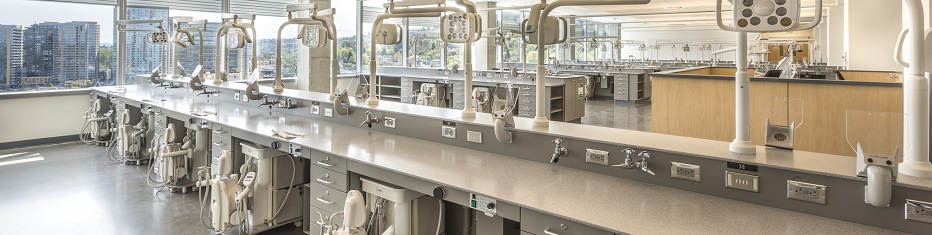
Stay up to date with the ever-changing world of dentistry with our state-of-the-art continuing education facility in Portland's beautiful South Waterfront District next to the Tilikum Crossing Bridge.
- Our courses are taught by world-renown researchers and scholars who present on topics that will make an immediate positive impact on your professional practices.
- We offer a wide range of continuing education opportunities, hosting 50-70 CE events annually for dental health professionals, clinical researchers, biomedical scientists, and dental educators.
- Our courses provide relevant, evidence-based resources to help you in your practice and to meet your license renewal requirements.
- The SoD CE Team is expanding our library of online offerings. Stay tuned!
Contact us
Continuing Dental Education Department
2730 S. Moody Ave
Portland, OR. 97201
Phone: 503-494-8857
Email: cdeinfo@ohsu.edu
Upcoming Courses
For a complete list of current and upcoming courses please click on the yellow button below
NEW & UPCOMING

NEW DEA MATE Act 8-Hour Training
On March 28, 2023 the U.S. Drug Enforcement Administration (DEA) issued guidance outlining requirements for a one-time, eight-hour training, “on the treatment and management of patients with opioid or other substance use disorders.” The Medication Access and Training Expansion (MATE) Act that was passed as part of the Consolidated Appropriations Act (CAA) of 2023 (P.L. 117-328) requires all DEA-registered providers to complete this training. This means YOU! Click on the following links to access the 2 module course Module 1 Course 4 hours, Module 2 Course 4 hours
Dental Immunization Training Program
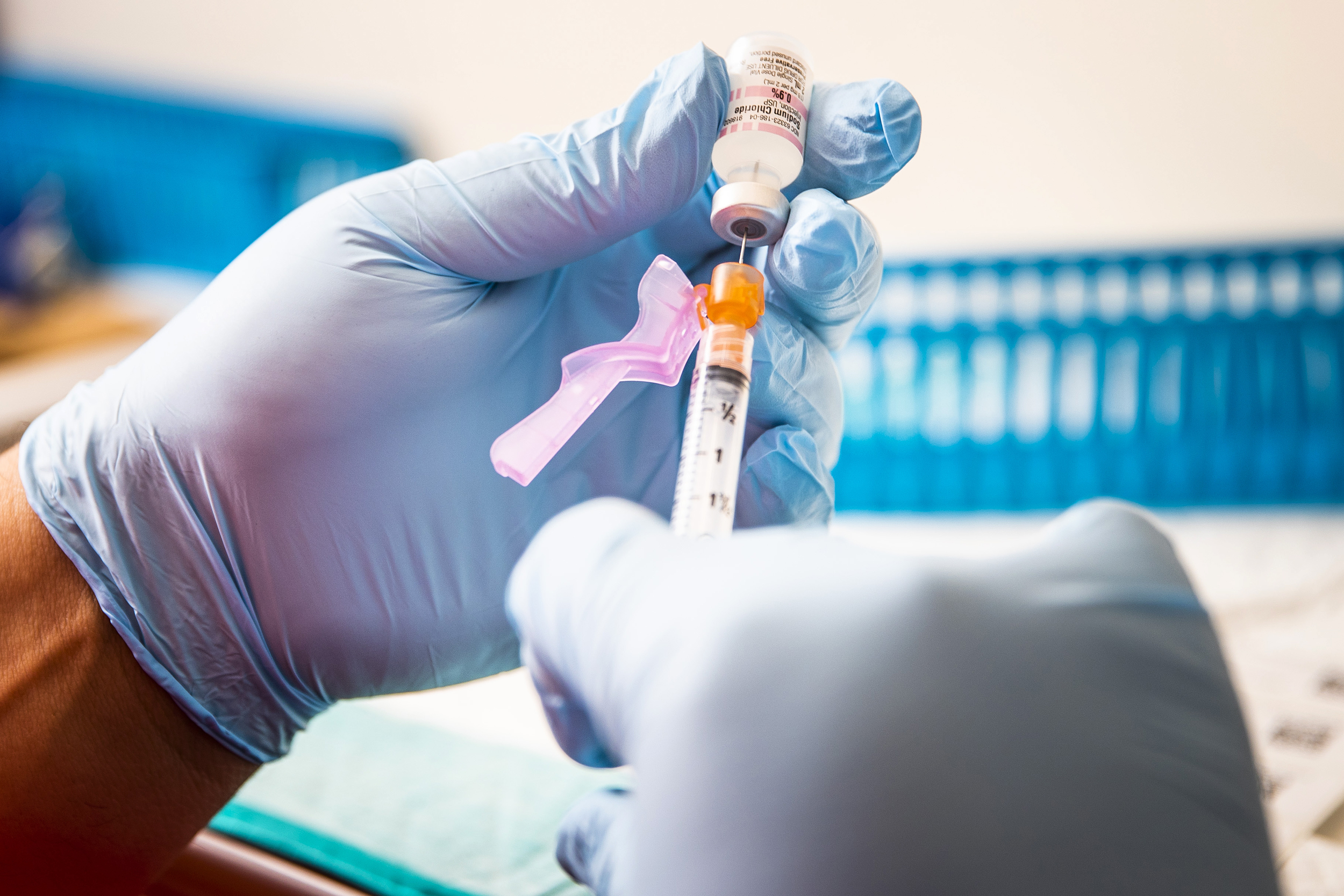
Yes, dentists and dental hygienists can now give vaccines in Oregon, with our training! Visit our new Oregon Dental Immunization Resource page for more information and up to date news.
Pain Management and Substance Use Disorder in Dental Settings 3.0
The purpose of this 8-session ECHO program is to build the capacity of dentists and their teams to identify and manage patients with oral pain or substance use disorders in the dental setting. Topics include strategies for managing dental anxiety for patients with SUDs and managing dental care of vulnerable populations with SUDs. Virtual Sessions take place on Wednesdays, 12:30 - 1:30 p.m. PT, January 17 - March 6, 2024 Click here to register
Oregon Required CE Course Links
OPMC Pain Management Module (Webinar)
Cultural Competency (Online take-anytime)
Medical Emergencies (Online take-anytime)
Oregon Health & Science University is an ADA CERP Recognized Provider. ADA CERP is a service of the American Dental Association to assist dental professionals in identifying quality providers of continuing dental education. ADA CERP does not approve or endorse individual courses or instructors, nor does it imply acceptance of credit hours by boards of dentistry.
Oregon Health and Science University is a member of the Association for Continuing Dental Education.