Lessons from Charlotte

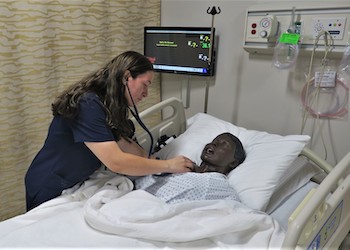
One of my favorite stories is EB White‘s Charlotte’s Web. I found myself reading it again recently and even though I know how it ends, I find myself crying every time. By the standards of nursing school, I realize Charlotte’s Web is not tough academic stuff. In that moment, however, my brain enjoyed a break from the rice cakes of professional literature to savor the mind candy of a good book. Charlotte’s Web isn’t really such a simple story, though, is it? Among the many things I love about it are the woven in principles of self-esteem, courage, identity, loss, and new beginnings. I love Charlotte and her firm yet empathetic ways and Wilbur as he timidly discovers self-worth and the value of friendship. My favorite, however, has always been the hyper verbal goose prone to clang associations. The plot and the characters in Charlotte’s Web, while based in a simple enough tale, truly are a case study in chronic illness and psychology.

Read more…

On the change in season

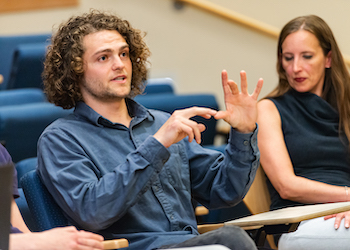
I had doubt I could articulate my thoughts in a manner worth reading, but with the transition to this autumn season I found my reservations about blogging fade. With the days getting short, I don’t get much opportunity to savor daylight outdoors, but I’m savoring my days as a physician assistant student nonetheless and blossoming with other opportunities. This week I had the privilege of speaking to a group of dynamic college students for the implementation of my Community Outreach Project. The project entails designing and delivering a presentation on a health promotion or disease prevention topic for a specific audience, then analyzing the results and outcomes.

I found my community group audience to be remarkably interested and passionate. They posed some insightful inquires about the topic and its implications for their lives.  After concluding the formal portion of my presentation, I was able to discuss the PA profession and OHSU’s program in a bit more detail with about 20 students who stayed to find out more. One particular question about networking to find a practicing PA to shadow made me realize how lucky I have been in my own experiences. Prior to applying to PA school, I was introduced through various means to a range of PAs and physicians who allowed me to be part of their work. I am still grateful for the opportunities they provided to me. (To answer her question: talking to family and friends, coworkers/colleagues, volunteering, and university or alumni groups can help to provide connections. State or National PA organizations are also great resources for information.) One member of the audience asked me about  personal medical interests and I found myself reflecting on what I have felt most passionate about to date. Others asked about what my day-to-day life as an academic year student had been like, what clinical rotations are all about, and how PAs and physicians work together to provide care for their patients.

Read more…

The 3rd reviewer

I know it is a publish or perish world. Despite my liberal arts background, where professors are not required to obtain grants to survive, I’ve recognized the importance of publishing, both for one’s own career growth, but also as the responsibility of the researcher to disseminate one’s findings. However, I had always believed that effort and experimental “luck” were the limiting factors. If you worked hard and there weren’t any experimental catastrophes (e.g. virus in the animal colony, bad antibodies, a poorly timed fire alarm), then it would be within your control to publish (of course, getting published in a high tier journal may be considered a long-shot). I can live with the fact that my findings may not be worthy of being printed in the elusive pinnacle of scientific journals, because if that’s my goal, then I need to redesign my experiments, shift my expectations, and add a few more difficult and expensive techniques. But when all the ducks are in line, it’s terribly disappointing to potentially lose out on a highly sought after publication due to factors beyond your control, such as a rogue, “unbiased” reviewer.

After years of data collection and over a month of writing, revisions, more revisions, re-writings, I submitted my manuscript, blindly optimistic at its success and believing in the simple formula: effort + time + creativity = publication. When you put your best product on the table why wouldn’t you be optimistic? The next couple of weeks were spent obsessively checking the “manuscript status” page on the journal’s website, waiting patiently as the status changed from “sent to editor” to “manuscript under review” and finally “under editorial review”, each step a small hurdle in this critical race. Waiting, waiting, waiting. Why is it taking so long? Sure, the reviewers have other jobs, other deadlines, their own papers and grants to write. I get it; this is the peer review process at work, the go-to credibility for any debate pitting scientific evidence against perception or belief (e.g. “Well, the peer reviewed literature claims…”). It’s a valuable process, but slow.  Three weeks, four weeks, five weeks. Getting anxious. 

Read more…

Over and over again

Learning is repetition. At least that is what seems to be true for us from an early age. As babies trying to stand up on our own, as toddlers testing the boundaries of parental restraint, as teenagers making mistakes that hopefully weren’t too serious: We don’t usually get it right the first time, and that seems to be true in medical school as well.

The start of the second year has proven to be repetitive.  Not in a bad way, in more of a “Oh yeah, I remember learning this” way. Looking back at the first year of school, it makes more sense now. All of that basic physiology we learned is helping the pathophysiology almost make sense this year. Rather than just memorizing the names of the heart murmurs and what they represent, we can actually explain why aortic stenosis gives off a crescendo-decrescendo sound (it’s all about pressure).

This is also my primary care preceptor year, where I stay with the same physician for the school year. Last week, I totally nailed the diagnosis of lateral epicondylitis for one of our patients. Oh yeah, at least one person in the room was excited about it (me)! This is a great chance for refining my meager skills in preparation for third year, especially considering that for my one correct diagnosis this year there have been 15 other incorrect diagnoses where my personal victory was being in the appropriate organ system.

Why I chose PhD, Part One

I know that one of the most egregious writing clichés is opening with a quotation, but I’d like to start with a brief passage from Moby Dick.

(I know it sounds pretentious and self-aggrandizing to start like this, but bear with me. And if quoting from the book brings back haunting memories of actually reading it, my apologies.)

In the middle of the novel, Captain Ahab is lamenting that he cannot stop his obsession with hunting the whale. “The path to my fixed purpose is laid with iron rails,” he says. “Naught’s an obstacle, naught’s an angle to the iron way!”

The iron way. That’s how I feel about graduate school.

Well, maybe that’s a little extreme. But you have to understand my journey to understand that opinion.

I wasn’t initially interested in graduate school. In college, I started off, like so many students vaguely interested in medicine or healthcare, wanting to be a physician.

Read more…

A nurse in patient clothing

Nursing students make terrible patients. More specifically, I make a terrible patient.  In my role as a student nurse I am an advocate, a supporter, and a teacher.  This summer, however, the tables got turned and I got the opportunity to be on the other side of the bed-rail.  Being a patient is a familiar role for me, but it is one I do not easily adjust to. As a patient, I got to view the nursing process from a whole different perspective.

I have congenital problems with my feet.  Ongoing complications over the past several years required surgery in order to continue to meet the physical requirements of my job and future career.  As I donned that gown and slid the surgical paper cap over my hair, the familiarity of the hospital setting suddenly felt frightening and very overwhelming.

In the first place, I had not realized before how terribly cold the pre-op holding area is. Full of banter and chatter from the nursing station, I listened to snippets of conversation and lunch menus trying to focus on anything but the fact that I was freezing and feeling very exposed in my thin gown. A nurse came in with a reassuring smile and a blanket from the warmer.  Heaven never felt so good!  She ran through my pre-op checklist and assured me that everything was set and ready to go.  An IV was started and a bag of Ancef was hung behind me.  In my mind I began to recite Cephalosporin pharmacology; anything to avoid staring at the needle aimed at my arm and to refocus the angst of surgery. As I was wheeled into the surgical suite I tried hard not to stare directly at the passing lights overhead. If I thought pre-op was cold, the surgical suite was downright freezing!  I started to shiver. The machinery and equipment from the angle of a surgical table looked bigger and far more ominous than I had remembered. They seemed to hover overhead like large, bright space ships. Even the fluoroscope in the corner seemed freaky all covered in plastic. Glancing around I understood clinically why the various tables were draped as part of the sterile process, yet, in my mind, it also seemed plausible that alien lasers and implantable microchips were hiding under all those drapes.  I took a deep breath, scolding myself for watching the Bourne Identity too many times.  I’d like to say I remember the rest of it but a large mask seemed to fall from the sky with the voice of God telling me to take deep easy breaths. From that point on it’s all a little foggy. I was told later I tried to bargain for a local anesthetic so I could observe the procedure.  Hey, why not? This was good clinical stuff!  A girl’s gotta try right?

Read more…

Searching for calm ambition

I completed my first career medical school exam this past Monday afternoon. When I returned home that evening, I had yet to recover from the adrenaline, and the rest of my life had collapsed into shambles. I had only small parcels of food in the refrigerator and a few clean clothes in my closet; I hadn’t spoken to either of my parents in over a week, and I felt mentally and physically exhausted. The following day, which was intended as a full, productive school day, I felt literally sick. I could barely process the information in my anatomy dissector, and when I scanned my course website after class, I couldn’t retain a thing.

I generally consider myself a fairly balanced person. While I certainly worked hard in school to get here, it was always a priority for me to counter academics with athletic, recreational, and self-health pursuits. Despite warnings from nearly everyone about the intense workload of medical school, I arrived here with confidence that I could maintain a sense of balance and still be successful. As it turns out, there is a learning curve to perfecting the balance with which I intend to live.

Each person in my class and in all medical schools made the firm decision at some point that they wanted to become a physician. We each wrote that goal down one day, some of us when we were five years old, others when we were twenty-five. Since then, we have taken countless steps toward achieving our dream, and most of those steps have relied on our ambition. Most people (even pre-med students) don’t love organic chemistry, but we had to master it. Completing applications to as many as 20 to 25 medical schools seems ludicrous, but a lot of us did just that. We jumped through proverbial hoops, made personal sacrifices, and volunteered a lot of our time in order to end up here. Thus, it makes sense that we maintain that same ambition now that we’re in school, and so naturally, we dedicate everything we have to our studies.

Read more…

Bring the weaponry

This past weekend members of PMCB, the graduate program in molecular and cellular biosciences, proved once again that scientists CAN party as we welcomed the new first year class at our annual PMCB Retreat. For us, the new second years, it was an excuse to catch up and see each other after a long summer of Comprehensive exams and research. We also might have imparted some upperclassmen advice to the new firsties. Maybe.

Graduate school is hard. Really hard. The first year is killer. Not insurmountable, but the threat of lethality hangs in the air like the stale smell of kimchi you threw away three days ago. Physically the kimchi is gone, but the fermentation smell is still there. In a program like PMCB, a small community where everyone talks and rumor mills make the rounds, you have to navigate the true from the false, the real from the fake, while dealing with general feelings of inadequacy and dread. You have to deal with classmates coming up to your face, telling you they heard you failed an exam, or being told there’s a rumor that that PI you liked so much, he really doesn’t have founding, or finding out during an exam that when the lecturer said you didn’t need to know how to derive Michaelis-Menten, he really meant you did. These things happen. Have happened. Will happen. So develop a thick skin now, before the bullets and knives start flying. This year is like going to war, so prepare yourselves accordingly.

Read more…

A Poem: “Needles and Pins”

My feet are numb from studying for hours endlessly.
The pins and needles down there make it difficult to see
exactly WHY I study into perpetuity.
What makes me stay
day after day?
Preceptorship, for me.

For four hours a week, somehow a brave doctor concedes
to watching me attempt to tend his patients’ every need.
Some patients are quite skeptical, I can’t help but agree-
Thank goodness for
this practice, or
I’d never earn “MD”.

One year we work in specialties, and one in primary care.
We can request specific fields– or chance it, if we dare.
I chanced it, and the preceptors to whom I have been paired
have blown my mind
with one-of-a-kind
experiences shared.

Read more…

Back to school: pencils, snacks, awesomeness

Portland’s school buses were out en masse this morning as I waited for my own bus up to the hill. It’s happening! School has started, fall is here, everything smells like #2 pencils and pink gum erasers. We’re fully ensconced, already 11 days in to our first block of medical school, and I still find myself checking to make sure I’ve packed all my necessary supplies for the day. Snacks, colored pencils (embryology coloring book, hooray!), clicker, coffee (should be top of the list), stethoscope. I know medical school isn’t necessarily the kind of school that beckons the yellow buses, but I feel like a kid all over again: trying to learn the ropes, not embarrass myself in front of my classmates or teachers, and just generally keep my head above all this new, deep water.

Most of us will start our preceptorships this week, which means we’ll be meeting our first official patient and potential mentors. We’re all a bunch of jittery nerves and clean white coats. (Sidebar: our class looks goooood in them!) It’s easy to get swept under the current of all this novelty, so I’m working on cultivating the habit of stepping away from the overwhelming undertow to acknowledge what an incredible thing it is that we are doing. Today I dove into the hands of my donor body in anatomy lab, discovering the muscles and tendons and nerves and blood vessels that make typing this and touching my future patients possible. I felt a classmate’s radial artery pulse under his skin, learned to correctly pronounce “sphygmomanometer,” and actually use one. A plastic surgeon helped me dissect a finger pulley on my donor body, which is often cut in surgery for stenosing tenosynovitis, or “trigger finger.” This is it, I keep saying to myself, we’ve pulled the trigger. We’ve jumped in. I’m reminded of what we were told in our Principles of Clinical Medicine course today: never forget the story inside the history. Though this was, on its surface, a gentle admonition to not forget our patients’ stories as forming the reasons why they will come to see us, I can’t help but think of it in the context of our first year of this adventure. I hope not to forget the story of how I got here, how I am both reveling and reeling in it. I’m writing this as a reminder to myself, my colleagues, and potential future medical students: pulling the trigger and diving in, feet first and with breathless abandon, is totally, undeniably worth it.

StudentSpeak

StudentSpeak

Ever wondered what life is like as a student at OHSU? What does it take to become a researcher? Just how gross is gross anatomy? Welcome to the blog that answers these – and many other – questions. It’s students writing first-hand about their commitment to careers in science and health care. It’s honest about the challenges as well as the joys. It’s not always pretty. But it is our story. Thank you for sharing it with us. And please, let us know what you think.

Read more

Participation Guidelines

Remember: information you share here is public; it isn't medical advice. Need advice or treatment? Contact your healthcare provider directly. Read our Terms of Use and this disclaimer for details.

News & Social Media

School of Medicine
Facebook
SoM News

School of Nursing
Facebook
Nursing News

godaddy web stats