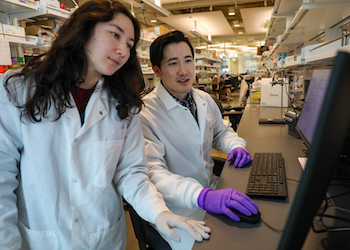
The Communication of Science, Part One

[As you read by the title, this is Part One in another of my lucky-to-be-nominated-award-winning series of two-part Mega Posts. Sorry, guys. Hopefully, this duology will be less like a continuation of one story and more like two meditations on a single topic. In this post, I’ll talk about the importance of good science communication, and in the next one, I’ll provide some of my favorite examples. Hopefully it’ll be fun for the whole family.]

One of the greatest things about science, in my opinion, is its almost neurotic obsession with exactness. (Please excuse me for anthropomorphizing the entirety of our practice, but since science is impartial and, you know, not alive, it probably won’t mind.)

Science—or scientists, rather— aren’t satisfied with vague approximations or educated guesses: they want the truth (and yes, Tom Cruise, they can handle the truth). They want to unwind everything, to shine flashlights around corners, to behave like mechanics and dismantle and rebuild the engines of nature until they can better understand how they work.

I know my metaphors are somewhat muddled—my writing has gotten a little flabby since college—but my point still stands: science is a precise discipline. And often, when communicating science to other people, that precision becomes an obstacle.

Read more…

Low Point

Let this be known as The Low Point.

I wasn’t prepared for it, much as I thought I was getting used to the feeling of never being 100% prepared and settling for a decent-enough understanding or grade. This weekend, despite all my kicking and screaming, I hit a serious low point in balancing school and the rest of life.

A snapshot: I can’t tell which basket is clean or dirty and there are no clothes hanging in my closet; I cleaned a spoon from the sink of dishes to eat frozen leftovers I don’t remember cooking (there were tomatoes involved, so I think it was summer then); I have emailed my PI without an attachment more than once today. We have one quiz, one block exam, one final, one practical exam in the next 7 days.

4 exams in 7 days. Not to mention the friend we have visiting on Thursday, the two afternoon labs this week, and a summer research proposal I have due tomorrow. I really don’t like the sound of my own whining, but it’s what I feel like doing most of all at the end of these days.

My sister, a fourth-year awaiting her match results, remembers The Low Point of her first year, and I’m watching my colleagues slump further down in their seats as the weeks go on (or begin to not come to lectures at all). I know I’m not alone in it. But what to do about it? I’ve tried giving myself a day off (the guilt turned quickly to tears and panic), buying new pens, cooking dinner. Nothing bypasses the truth of my life right now: I have more work than I can possibly swallow and nothing is going to be exemplary, from the dishes to my hair to my exam results to calling my friends when I say I will (sorry, guys!).

I know it’ll get better. Until then, I’m hanging on, and the knowledge that these low points (I know there will be more) are worth it makes my grip even stronger.


My Day Through the Lens of Public Health

Unless your workplace is having a snow day or you brought an incredible lunch to look forward to – Mondays tend to be a bit of a bummer. As we all push through the daily grind – I try to revitalize my afternoon with a reminder of how often public health touches our lives each and every day…

Graphic courtesy of here

(Adopted from www.whatispublichealth.org)


6:30 am
BUZZ. Wake up and brush my teeth, take a shower and get that coffee brewing! Luckily, my water is potable and I don’t think twice about turning on a faucet.

7:04 am
My stomach is rumbling as I head to the kitchen to scarf down anything convenient and edible. Thankfully, in a more awake state of mind I was paying attention at this year’s American Public Health Association conference, which showed research on the country’s rising obesity epidemic and thus I’m opting for organic milk, oatmeal and OJ over pop tarts and energy drinks.

7:19 am
Cursing an insane driver who sped through a red light while texting, my seatbelt tugs at my shoulder and prevents whiplash, my brakes screech to a halt. Injury prevention is a silent lifesaver quietly involved in the mechanics and design of countless aspects of our lives.

Read more…

H-Bonds

No term is easy. No experiment is a walk through the park, no class is not challenging (whether it’s like the teacher is spewing out facts in Greek or you are bored out of your mind). “Anything worth doing….” as the saying goes, though sometimes I wish there were more hills and less valleys. Sitting in my Developmental Neurobiology class a couple of weeks ago, the lecturing professor did some cool things. He talked history. He talked art. He talked life. He told us stories of our early twentieth-century forebearers – Ramon y Cajal and Hans Spemann, among others. Their lives,their backgrounds, their philosophies were given to us, connecting their life with their science.  “You must choose a hero, someone you can look up to when times in the lab get rough. Someone you can hold on to to guide you through it. A science hero.” An inspiration. A science hero.

In everyday life we tend to idolize greatness and thoroughly crucify failure . . . and everyone has an opinion on who is truly great. The history of the world is full of opinions and feelings and assertions, all at odds with each other. In science, we tend to de-emphasize our history. Assays, genes, and various other techniques we use often bear our science forefather’s names, yet the person behind the discovery is often forgotten. “To know our history is to know our future . . .” and yet many of us young investigators are ignorant of where our knowledge comes from. Our science grandparents and great-grandparents are forgotten as we push to gather more data, to publish more articles, to push the envelope ever further to the edge.

Read more…

Q: Do I have to know this? A: Yes, yes, you do.

Finally! There are sparkling moments, here and there, very rare, that I feel like I’m on the verge of, just the tip of the iceberg of… (dare I say it?) … being a doctor. Scratch that: there is nothing about my being that is a doctor just yet, but I can feel the gears of my brain clicking into thinking like a doctor. It’s not graceful, it’s full of errors and embarrassing missteps, but I’m absolutely reveling in it.

It’s no coincidence this feeling coincides with a shift in our 1st year medical education from mostly memorization to conceptual, problem-based learning. Our “how-to-be-a-doctor” class, Principles of Clinical Medicine, introduced us to problem-based learning last week, wherein we were presented a case and bumbled together through deciphering physical exam findings, diagnostic test results, etc., to arrive at both a diagnosis and a better understanding of the ways in which we think and approach medical problems. Our new course, Systems, Processes & Homeostasis, has woven a semester-long, case-based, exploratory portion into the course itself. In our first meeting today, I loved seeing how my peers think, how they approach what is to us, essentially, a total mystery. I can’t wait to report back to them what I’ve discovered tonight—that our case is not such a mystery, that we might know more than we think, that what we have learned in our first two courses—6 months and an inordinate amount of studying, paper, head-scratching—actually does apply here.

This has been particularly noticeable in these last couple days of the 2nd half of our 1st year of many years of medical learning (technically we’re 12.5% doctors now!), and it’s evidenced in the decline of one of our favorite questions, “do we have to know this?” and its little brother, “will this be on the test?” I think we are all relishing the chance to sink our teeth into cases, to put into context what we’ve spent a long time learning and what we’re still just trying to grasp. I think we’re beginning to understand that, yes, we do have to know this: it may save someone someday.

2013

“I’ll do it during winter break.”

My wife heard this phrase a lot between August and December. It was used for everything from getting the baby’s room done to washing the car. Really it was an attempt by me to prioritize things without ignoring them completely. . . So naturally, come winter break, my honey-do list was enormous.

I managed to get 80% of the projects done: baby room mostly set up, laundry room ceiling framed and drywalled, new floors in the office, car not washed. Not too bad for a guy who also managed to squeeze in a double-header movie day in as well.

I’m nervous though.

Nervous because I don’t think this way of prioritizing is going to work very well anymore. I can’t exactly postpone taking step 1 of the boards, and I can’t exactly postpone spending time with our new baby boy (who we’re expecting at the end of February or so).  So what is going to give? I’m not sure, but I know that people have done it, and that they’ve even done it with more responsibilities than I have. Reading blogs like the one Dr. Alison Christy posted (titled “Balancing Act”) makes me realize that it is possible, and that things probably won’t be getting any calmer for a long time.

Fortunately, being excited is overriding the being nervous: Excited to take the USMLE step 1, excited to start 3rd year clerkships, excited to meet my son for the first time, excited to start our family. 2013 will be a good year!

Academia vs. Industry: Double-post edition

During job interviews—at least in the tie-wearing, business-jargon-having corporate world—prospective employers generally ask something like: Where do you see yourself in five years?

I base this observation on rumor, speculation, and reading Dilbert cartoons, well, because I’m a newly minted grad student. I have no experience with the corporate world.

Besides, the career trajectory of a researcher, not unlike Calvinist doctrine, is subject to predestination: I know where I’ll be in five years. Most likely, I’ll have just graduated with my PhD and, having accepted a post-doc position, will probably spend another five years somewhere else doing research. Successful business majors, eat your heart out.

At this point, however, this career trajectory becomes less prescribed. After the post-doc position, the researcher’s career path bifurcates into two separate yet equally important groups: the academics who investigate problems, and the industry members who profit from the discoveries. These are their stories. *clang clang*

Read more…

I survived ACLS

“Your patient is a 58 year old male presenting with chest pain 8/10, pulse is 190, BP 80/70 and respirations 20,” the instructor said. “Suddenly he snorts and collapses; you see this rhythm. What do you want to do?”

I swallowed and looked down at the greyish plastic face of the mannequin and watched as little black lines squiggled their way across the EKG monitor with an impending sense of doom. Somebody call a code, I think I’m having a heart attack!  SVT, V-tach, PEA, Amiodarone, Adenosine, Atropine…my brain raced through a jumble of names and symptoms and algorithms.  Just like an episode of ”ER”, the world suddenly seemed to move in slow motion around me.  The sound of my own heart thundered in my ears.  I was running my first simulated major code!

For the first three days of Christmas break, I decided to tackle the challenge of Advanced Cardiac Life Support (ACLS) certification. I signed up for the course eager for a chance to learn more about EKG interpretation and to practice more advanced nursing skills. I was not disappointed.  The challenge on day one was absorbing a mountain of information and forcing myself to sit still for the better part of 8 hours. After deciphering what must have been miles of rhythm strips, I was still at a loss to identify runs of PAC’s from third degree heart block. I left, slightly disheartened (pun intended) with rhythm strips and terminology scrambled in my mind and all over my notebook. I had even drawn a bundle branch block on the back side of my hand when the margin of my paper was full.

Read more…

Surviving the s#*t storm

We’re all familiar with success. A resume composed entirely of failures doesn’t get you into a graduate degree program. We’ve been on honor rolls, dean’s lists, members of academic honor societies, and won our fair share of awards. Let’s face it, that’s the only way you get accepted to a place like OHSU; if your parents’ refrigerator had arms, it would reach out and pat you on the back. But is that still the case? Mostly, our lives are no longer dominated by consistent graded feedback. Yet, even when they are, the academic rigor has escalated exponentially. No longer does merely “showing up” guarantee a B. Instead, the quality of competition is enhanced and fewer recognitions are available. The form and frequency of performance feedback has shifted during graduate school, and how we handle this change greatly impacts our long-term motivation and thus, success.

In high school, I supplemented graded feedback with weekly successes on the ice rink, the soccer field, or the volleyball court. Then in college, I stoked the competitive fire by competing on our college hockey team and in weekly intramurals. This meant that a poor test performance, or a competitive loss could be volleyed by a decent grade in another class or a win on the ice. These multiple pathways to achieving successes were important for preventing the negative feedback loop by which a series of failures seemed to always beget another. But the greater independence inherent in obtaining a graduate degree is accompanied by infrequent and inconsistent feedback, now limited to grant and manuscript submissions, each taking weeks/months before feedback is received. While many find the greater independence refreshing, and we’re grateful to be unshackled by looming exams and persistent evaluations, we also sacrifice the opportunity to experience those mini victories to which we had become conditioned.

Read more…

Why I chose PhD, Part Two

This is the long-awaited conclusion to Part One, the fascinating and hackneyed story of my decision to go to graduate school instead of medical school.

I apologize for the monumental gap between posts. Graduate school is clearly more difficult and time-consuming than I expected, and studying is always more important than short-form navel-gazing. But I wanted to conclude my first post, if only to prevent this response from becoming my Chinese Democracy—eagerly awaited (*cough, cough*) and ultimately somewhat disappointing.

Previously, I mentioned that my interest in graduate school was practically unavoidable, and I used the metaphor of railroad tracks (the iron way!) to characterize its immutability. But coming to this understanding was difficult because I always wanted to be a physician. Medical school became my Polaris, and I navigated my undergraduate course under its direction, shadowing doctors, volunteering at hospitals, joining pre-med clubs. I enjoyed learning about medicine, particularly medical research, and was prepared—confident, even—to fulfill my lifelong dream of becoming a physician.

Read more…

StudentSpeak

StudentSpeak

Ever wondered what life is like as a student at OHSU? What does it take to become a researcher? Just how gross is gross anatomy? Welcome to the blog that answers these – and many other – questions. It’s students writing first-hand about their commitment to careers in science and health care. It’s honest about the challenges as well as the joys. It’s not always pretty. But it is our story. Thank you for sharing it with us. And please, let us know what you think.

Read more

Participation Guidelines

Remember: information you share here is public; it isn't medical advice. Need advice or treatment? Contact your healthcare provider directly. Read our Terms of Use and this disclaimer for details.

News & Social Media

School of Medicine
Facebook
SoM News

School of Nursing
Facebook
Nursing News

godaddy web stats