Reducing patient readmissions with telemedicine technology

By Jean McCormick, R.N., M.S.N.

Open dialogue is vital to building and maintaining successful health care collaborations. Having a “brown bag” session is a dynamic approach to educate, communicate and maintain that collaboration. It is also an important way to establish and maintain relationships between OHSU and transitional care facilities in addition to working toward a larger goal – reducing patient readmissions.

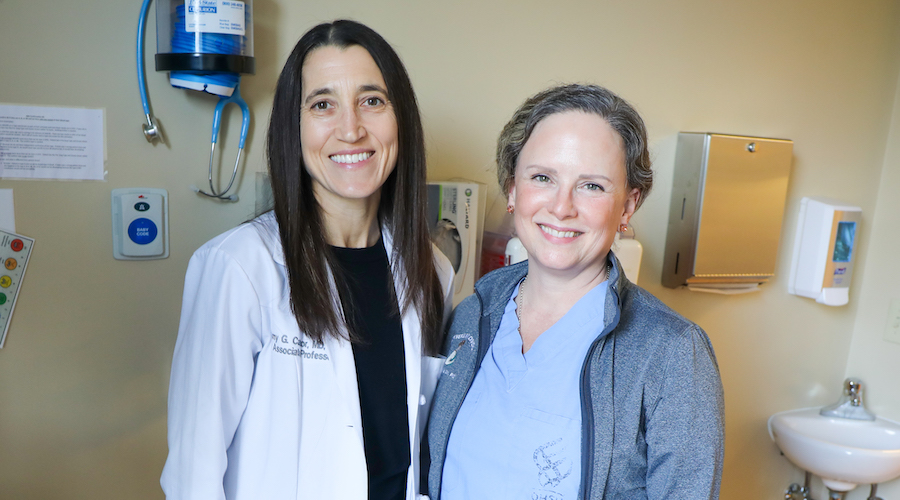
Since December 2012, the OHSU Telemedicine Network has offered a series of educational sessions with Skilled Nursing Facilities (SNFs) using videoconferencing software that can link up to 40 sites at one time. These sessions open up many avenues for discussion regarding nursing skills, research, and best practices.

Currently, the OHSU Telemedicine Network is connected to three of Prestige Care’s skilled nursing facilities. Our first four educational sessions focused on complex subjects that include care and use of PICC (Peripherally Inserted Central Catheter) lines, infectious disease, antibiotics and lab tests.

Although none of us knew what to expect when we launched the series, these lunch-time learning sessions were well received. Seeing everyone connected on a screen in a “Brady Bunch” format was great. Thanks to technology, these sessions also were completely interactive. For example, all of the participants were able to see a demonstration of the best approach to changing a dressing for the PICC lines that were performed on patient manikins. By discussing, simulating, educating, and collaborating, the discussions facilitate better care for the patient along with standardizing practice, which means improved outcomes and hopefully fewer readmissions.

Clearly, the same technology that allows OHSU specialists to treat patients across the state by way of the OHSU Telemedicine Network also makes it possible to improve collaboration with health care staff at area skilled nursing facilities – and no one has to leave their work place to participate in this learning experience.

OHSU has now presented four “brown bags” and while it’s still a work in progress, new ideas and topics are on the horizon. It has become another mode of communication that links OHSU with transitional care facilities, improving patient care and reducing complications and health care costs.

OHSU celebrates 125 years with new exhibit

By Bob Applegate


Marquam Hill in the early 1920s

Did you know:

  • OHSU was not the first medical school in Oregon? In fact what became OHSU was started 125 years ago by dissident faculty who left Willamette University School of Medicine.
  • The land OHSU sits on was originally going to be developed by a local shipping company until they figured out it sat on steep slopes. Instead, the company donated it to their company surgeon, who, incidentally, was also the dean of the University of Oregon Medical Department.
  • The precursor of today’s OHSU school of dentistry is not from Oregon at all, but from Tacoma, Washington.
  • OHSU was the site of the first Tinnitus clinic in the US.

All this and more can be learned from an exhibit at the Oregon Historical Society celebrating OHSU’s 125th anniversary – our quasquicenntenial.

The exhibit – OHSU: 125 years of Healing, Teaching and Discovery — opened March 14 and will run through July 8. It tells the story of how a small medical department grew into the OHSU we know today that encompasses hospitals, clinics, research, education and community outreach.
It also features fascinating objects from the last 125 years of medical practice including a collection of gallstones, teeth molds, scalpels, foot-powered dental drills and more.
You can learn more about the exhibit here; or preview the exhibit by reading this recent article from The Oregonian.

***

Bob Applegate is the associate director of community engagement at Oregon Health & Science University.

Telestroke patient benefits from effort to extend the window for stroke treatment

By Wayne Clark, M.D.

Most everyone knows how important it is to seek immediate medical attention if you are experiencing stroke symptoms. Clot buster medications (TPA) are most effective when given within three hours of a stroke and newer clot removing devices (stent retrievers) are approved for use up to eight hours after known stroke onset.

However, patients and families cannot always get to the emergency room in time. Examples include if the stroke occurs while they are asleep or if they are found with stroke symptoms and are unable to communicate when the stroke started. In these situations, we have always used the time when the patient was last known to be normal to guide the treatment plan. This means that these patients usually arrive at the emergency room long after we are normally able to treat them.

New advances in brain imaging may be changing these strict time limits. Using a special brain CT or MRI perfusion (CTP or MRP) scan allows us to see how much of the brain is already too badly injured to save (core area) and how much is not getting enough blood but might still be saved if treated (low blood flow area). If the area of low blood flow is larger than the core damaged area, treatment might still help the patient regardless of how many hours have passed since the stroke occurred.

Last month, the OHSU Telemedicine Network treated a stroke case that demonstrates how advanced imaging may expand the stroke treatment window. A 84-year-old previously healthy woman was brought to the Salem Hospital emergency room with stroke symptoms. Salem Hospital’s Timothy Edelbute, M.D., called OHSU and requested a tele-stroke consultation. Minutes later I was able to examine the patient and talk with the family using a two-way audio-video robot that had been wheeled to the patient’s bedside.

The exam showed the patient was suffered a stroke on the right side of her brain. She was unable to move her left side and had slurred speech and vision problems. The patient was unable to say when the stroke happened. Her family found her on the floor at 7 a.m. But they had last seen her acting normally at 11 p.m. the previous evening. It was, therefore, more than ten hours since she was known to be normal. She was far beyond the three-hour window for the standard clot buster treatment – t-PA.

The decision was made to transfer the patient to OHSU’s neurologic critical care unit for close observation and evaluation. I discussed using our new CTP imaging with the family 0to determine if we might still be able to treat her stroke and they gave permission for us to proceed. Her CTP is show below:

The pictures on the left show in bright pink the “core” area of brain than is likely irreversibly damaged. In this case there is no area that showed up as pink!

The pictures on the right show in green the area of the brain that is not getting enough blood flow. This large area is at risk for dying if blood flow is not restored. Since the area at risk was large and the damaged area small, we treated her with our new clot removal stent retriever technique.

We successfully removed a large blood clot from the main artery to the right side of her brain (internal carotid artery) at 1 p.m., which was 14 hours after she was last known to be normal. By the next day, she was fully recovered. The brain CT scan 24 hours later showed no evidence that she had had a stroke!

I just saw her for a one month follow-up exam and she is back living her very active life. Interestingly, she doesn’t remember much about the stroke treatment procedure but does remember talking to me on the “TV screen in Salem”.


***

Wayne Clark, M.D., is the director of the Oregon Stroke Center at the OHSU Brain Institute. Dr. Clark received his medical degree from Oregon Health & Science University and completed his neurology residency and stroke fellowship at the University of California at San Diego. Dr. Clark`s clinical interest is in the acute treatment of stroke, including the investigation of new potential stroke therapies.

Eat right, your way, every day: National Nutrition Month

By Tracy Severson, R.D., L.D.

Some people celebrate the holidays in December, but dietitians tend to get excited about March—it’s National Nutrition Month!

This year’s theme is “Eat Right, Your Way, Every Day,” which, according to the Academy of Nutrition and Dietetics website, “encourages personalized healthy eating styles and recognizes that food preferences, lifestyle, cultural and ethnic traditions and health concerns all impact individual food choices.”

So what does that mean for you? To me it means that every day, we should think about what we’re putting in our bodies. Figure out what you like, and why you like it. Did you grow up on traditional Mexican foods, Italian pasta dishes, or, like me, Southern fried chicken? Take those foods that resonate with you and learn how to adapt them for a healthy diet. Put some thought into your meals so they nourish your body and your soul—a healthy diet should be nutritious and enjoyable, otherwise it’s unrealistic to expect to stick with it permanently.

You can use each part of the 2013 National Nutrition Month theme to help make healthy food and nutrition a part of your daily life.

Eat right

Fill up half your plate with fruits and vegetables, use less salt, choose whole grains instead of refined grains, eat fish twice a week…I know you’ve heard the recommendations before; this month think about ways to incorporate healthy changes into each meal.

Your way

Develop a meal plan and grocery list filled with wholesome foods you enjoy. Look for healthy versions of your favorite recipes, or try modifying the ingredients or cooking techniques in your not-so-healthy standards. Get creative!

  • Choose smaller portions of higher-fat foods.
  • Experiment with herbs and spices in order to reduce the salt.
  • Opt for baking or broiling instead of frying.
  • Substitute whole grains whenever possible (e.g., whole wheat pasta instead of white pasta).
  • Always (always!) think about ways to increase the vegetables in recipes and on your plate.

Every day

Incorporate small changes in your diet every single day to improve your overall health and well-being, and take time each day to think about the food you eat and how it impacts your life.

  • Plan your meals in advance to help ensure a balanced diet.
  • Cook with your kids to pass on family traditions and teach them about nutrition.
  • Sit down for family dinners to catch up on everyone’s day.
  • Host a potluck with friends or neighbors to share good times over healthy food.

I hope you spend National Nutrition Month enjoying nutritious meals with loved ones and thinking about how your food choices shape who you are. As for me, this month I plan on perfecting my not-so-Southern oven-“fried” chicken served on a bed of roasted vegetables. Not exactly like my grandmother would make, but still delicious, and certainly prepared my way.

***

Tracy Severson is an outpatient clinical dietitian at OHSU. She earned Bachelor’s degrees in Nutritional Sciences and Sociology from the University of Arizona and completed her training to become a Registered Dietitian (R.D.) at the University Medical Center in Tucson, Arizona. Since becoming an R.D., she has also completed a Certificate of Training in Adult Weight Management.

Tracy moved to Portland from Tucson in 2010, and has worked at OHSU since 2011. She works with the OHSU Surgical Weight Reduction clinic and Cardiac Rehab program, and also provides medical nutrition therapy for General Adult Outpatient Clinics at OHSU.

I never imagined I would be diagnosed with cancer at age 23

Katie used to tan at least once per week and sometimes more frequently.

By Katie Wilkes

My name is Katie. OHSU employees may know me as the editor of OHSU Research News or the person you email when you need help finding grant funding. What they probably don’t know is that the first week I started working at OHSU, I was diagnosed with the most deadly type of skin cancer: melanoma.

While it’s not always easy sharing such a personal story, when I found out OHSU was supporting Oregon House Bill 2896 (the “teen tan ban”), I knew I had to get involved.

I started using tanning beds when I was 16 years old. Like many teenagers, I was self-conscious about my appearance, especially after being teased for having “ghostly” white skin my whole life. At first, my mom refused to let me tan. She would say things like, “You’re beautiful the way you are,” and tell me how tanning would make my skin look like leather by the time I turned 30. No matter what she said, though, I hated the way I felt when I looked in the mirror. So many other girls were tanning, why shouldn’t I be able to do it, too?

After months of begging, my mom finally caved and I starting visiting tanning salons with my friends. Many salons in Portland never even checked my ID to see if I was underage, let alone kept track of how many minutes I spent in the beds.

When I was 16, I was an honor roll student at Saint Mary’s Academy in downtown Portland. Oddly enough, that’s part of what made tanning seem okay to me. It wasn’t as bad as drinking or smoking. Even the “good girls” wanted to be tan for prom and senior portraits. By the time I left for college, I was tanning at least once a week, sometimes more.

I never imagined I would be diagnosed with cancer at age 23. I found out on the third day of work at OHSU. Within days, I was referred to a surgical oncologist who made a three-inch incision on my chest to remove the melanoma. I was lucky enough to catch it before it spread, but that’s what’s so scary about melanoma. It’s not just skin cancer. It’s unpredictable and can grow from Stage I to stage IV in a heartbeat. I continue to be haunted by anxieties that I’ll develop a second melanoma. Many survivors do, and maybe I won’t be so lucky next time.

At age 16, I thought I understood the risks of tanning, but who really thinks they’re going to get cancer before starting their first real job? In reality, melanoma has become the most frequently diagnosed cancer for women my age—and it’s not going to stop unless we do what we can to protect children from the dangers of indoor UV tanning.

A few weeks ago, I had the opportunity testify in Salem with Dr. Druker and several others in support of House Bill 2896. I think this proposed legislation has triggered an important discussion about the skyrocketing melanoma rates in Oregon. I feel very lucky, not just to be alive to share my story, but also to have the opportunity to speak on behalf of so many other people impacted by melanoma in our state.

***

Katie Wilkes manages the Research Funding & Development Services program at OHSU. Outside of work, she blogs about her experience as a 20-something-year old melanoma survivor at www.prettyinpale.org, and she is coordinating the 2nd Annual Portland Melanoma Walk, which is scheduled for Saturday, May 11, at Wallace Park in NW Portland.

Neuroscience on the brain

By Jackie Wirz, Ph.D.

OHSU is filled with all sorts of brainy people, ranging from your local faculty superstar who is a prestigious Howard Hughes Medical Institute Investigator to hardworking students who won their first major grant to fund their graduate research.  Speaking of students, OHSU is home to more than 2,800 students enrolled in 42 different academic programs.  That’s a lot of brain power!   For one of those programs, 2013 marks a significant anniversary: the Neuroscience Graduate Program turns 20 this year.

Neuroscience can be loosely defined as the study of nervous system; however, the modern scope of neuroscience research has expanded to include a vast array of scientific approaches to better understand the nervous system and the brain.  These range from the study of the developing neural systems in humans to atomic-resolution imaging of chemicals involved with neural transmission.  As our collective interest in the brain grows, it is imperative that academic institutes continue to produce scientists capable of meeting the research challenges of the future.

The Neuroscience Graduate Program (NGP) at OHSU is one of our premier graduate programs, and has grown to be an exceptionally multidisciplinary program.  At its core, the program is comprised of more than 150 faculty that cover a huge range of research topics.  The depth and breadth of NGP graduate faculty allow students to build a graduate program that encompasses a wide-ranging view of the neurosciences through seminars and class work while simultaneously deepening their own expertise in their chosen thesis topic.  This combination of highly specialized training in the context of a broad, multidisciplinary scope helps create the next generation of truly collaborative and multidisciplinary scientists.

Additionally, the NGP provides several unique offerings that help set it apart as a truly collaborative and fun community of scholarship and research.  Incoming students are treated to a weeklong boot camp that provides a good orientation to the scope of techniques and topics covered here at OHSU.  The NGP retreat offers a chance for students, postdocs, research ranked employees and principal investigators to mix and mingle in a casual environment while learning about the latest research.  Of particular interest is the highly popular “Data Blitz,” which allows participants the opportunity to present new data and get hazed by their fellow scientists (it’s not often that you can deploy loud noisemakers on senior faculty when they run over time!).  On a more serious side, the NGP retreat hosts nationally renowned keynote speakers from industry and academia.  More facets of the program and its distinguished alumni can be found here.

Despite the fact that I am not a neuroscientist, I actually have direct experience with the neuroscience program – I was an undergraduate intern in the Neuroscience Summer Research Program, a three-month intensive research experience sponsored by the NGP and the Vollum Institute.  This amazing opportunity gave me some of my first experiences with formal graduate-level education, ranging from the Vollum’s weekly seminar series to learning the details of establishing a new protocol.  Retrospectively, this formative experience directly influenced my decision to pursue research science at the graduate level and is one reason why I applied to OHSU.  Although I may not have studied the nervous system and the brain, I owe my scientific successes in part to the brainy people that make up the Neuroscience Graduate Program.  Congratulations on your 20th year – and here’s to many more decades of success!


***

Jackie Wirz is an Assistant Professor and the Biomedical Sciences Information Specialist at the Oregon Health & Science University Library. She earned her Ph.D. from Oregon Health & Science University in Biochemistry & Molecular Biology and has a B.S. from Oregon State University in Biochemistry & Biophysics. Her research career has spanned 15 years and has covered diverse topics such as transcriptional regulation, macromolecular structure determination, collagen biophysics and DNA repair. Her professional interests include information, data, and knowledge management, as well as the publishing paradigms of scientists.

Additionally, Jackie is a strong proponent of science outreach and volunteers with a variety of programs designed to promote scientific literacy. Jackie believes in evolution, salted caramel buttercream and Jane Eyre.

Developmental biology in action

By Jackie Wirz, Ph.D.

For those of you who don’t know me, I am an uber nerd. I love graphs, am conversant with Star Trek and Star Wars, and was even a Mathlete in high school. (Amazingly enough, I did have a date to junior prom, but in all honesty I probably would have been happier if I stayed home and watched the X-Files.) I lean towards quantitative science, and have always found comfort in the cold hard truth of mathematics. The field of developmental biology is fascinating, but I’ve always classified it as “too alive and squishy” for my personal research tastes.

I’m much happier working with chemicals than animal models. This preference has been with me since my earliest research experiences, where I began my career by inoculating and assaying thousands of cold, tiny Atlantic salmon. I spent a couple years smelling vaguely like fish (not surprisingly, during this time, I did not have a date to senior prom).

Fast forward several years: in my new capacity as an information scientist, I figured my odds of having to work with the “alive and squishy” stuff of developmental biology had dropped effectively to zero. However, that has all changed as I am now enrolled in the world’s most intensive developmental biology class ever: I’m expecting my first child in March!

Now I am desperately wishing I had paid more attention to all of those lectures on embryogenesis, neural crest development, or the basics of the circulatory system. My body has undergone such dramatic changes in the last 8 months, I barely recognize myself. And that doesn’t even begin to address the amazing development of the baby inside me (he is currently vigorously kicking my bladder, just for fun).

I am simply awestruck by the complexity of pregnancy, and with this new-found, “hands on” experience in developmental biology, I am looking at our research portfolio with fresh eyes.

Here at OHSU, we are no slouches in the fields of developmental biology or pediatric research.

In combination with our OHSU Center for Women’s Health and OHSU Doernbecher Children’s Hospital, I feel comfortable knowing that all aspects of my developmental biology experiment – from the basic science of blood stem cell development to my child’s future healthcare needs – rest in good hands.

***

Jackie Wirz is an Assistant Professor and the Biomedical Sciences Information Specialist at the Oregon Health & Science University Library. She earned her Ph.D. from Oregon Health & Science University in Biochemistry & Molecular Biology and has a B.S. from Oregon State University in Biochemistry & Biophysics. Her research career has spanned 15 years and has covered diverse topics such as transcriptional regulation, macromolecular structure determination, collagen biophysics and DNA repair. Her professional interests include information, data, and knowledge management, as well as the publishing paradigms of scientists.

Additionally, Jackie is a strong proponent of science outreach and volunteers with a variety of programs designed to promote scientific literacy. Jackie believes in evolution, salted caramel buttercream and Jane Eyre.

How to eat produce in the winter

By Tracy Severson, R.D., L.D.

As we settle into winter here in the Pacific Northwest, a common complaint I hear from my patients is the lack of appealing fresh produce this time of year. Are you letting the gray, chilly days serve as an excuse not to eat your five-a-day? If so, keep reading! There are plenty of ways to boost your produce intake until spring arrives with its fresh crop of fruits & veggies.

Eat seasonal fruits and vegetables

Tired of apples and bananas? A variety of citrus fruits are currently showing up in stores. Break out of the orange rut and try a grapefruit, clementine, tangerine, pommelo, or kumquat for a healthy dose of vitamin C and a bright, refreshing burst of flavor. Kiwifruit pack a full day’s worth of vitamin C and 3 grams of fiber in each fuzzy fruit (the skin is edible, but I still opt to peel mine).

Cruciferous vegetables such as broccoli, cauliflower and kale are nutrition powerhouses that are currently in season—try roasting them to bring out a nutty, caramelized flavor.

Frozen produce as an alternative

Still miss your berries, stone fruit, and tender veggies? Frozen fruit & vegetables are every bit as nutritious as fresh, so take a trip down the freezer aisle and stock up on frozen berries, peaches, asparagus, and green beans. I like to stir frozen berries into nonfat plain Greek yogurt—as the berries thaw, their juices sweeten the tart yogurt. No added sugar needed!

You can toss frozen veggies into a stir-fry with chicken or shrimp and serve with brown rice or quinoa for a quick, nutritious dinner. If you don’t like the texture of frozen fruit or veggies, whip up a tropical smoothie in the blender for a fiber-filled breakfast or add frozen veggies to a soup that you puree with an immersion blender. You’ll still get all of the nutrients and flavor, and nobody will know they were frozen.

This summer, plan ahead and stock up on extra fruits & veggies at the farmers’ market (or from your garden)—stash in your freezer for a taste of sunshine when next winter’s blues get you down. There are many local classes that teach safe home preservation techniques. Sign up for one and explore home canning as a way to store your bounty. Your taste buds—and body—will thank you!
***

Tracy Severson is an outpatient clinical dietitian at OHSU. She earned Bachelor’s degrees in Nutritional Sciences and Sociology from the University of Arizona and completed her training to become a Registered Dietitian (R.D.) at the University Medical Center in Tucson, Arizona. Since becoming an R.D., she has also completed a Certificate of Training in Adult Weight Management.

Tracy moved to Portland from Tucson in 2010, and has worked at OHSU since 2011. She works with the OHSU Surgical Weight Reduction clinic and Cardiac Rehab program, and also provides medical nutrition therapy for General Adult Outpatient Clinics at OHSU.

Our children deserve stronger protections from cancer-causing tanning devices

By Brian Druker, M.D.

Early on in my career, I promised cancer patients and their families that I would do everything I could to find new ways to treat and prevent this complex and deadly disease.

That promise shapes my priorities, and because of it, I am compelled to act when I see a gap between our actions and our knowledge.

Skin cancer remains a highly preventable form of the disease that impacts a disproportionate number of Oregonians. Our death rate from skin cancer is the fourth highest in the nation.

What we know, with complete certainty, is that exposure to ultraviolet radiation increases an individual’s cancer risk. The use of indoor tanning devices raises a person’s chance of developing melanoma by at least 20 percent. The stakes are highest for young people. Those who start using an indoor tanning device before they turn 35 have a 75 percent higher risk of developing melanoma.

Today, the Oregon legislature took an important step by introducing House Bill 2896 that would prohibit children younger than 18 from accessing indoor tanning devices. Only two states, California and Vermont, have a similar ban.

As director of the Knight Cancer Institute at Oregon Health & Science University, I will vigorously support this legislation. There is no question in my mind that, just like cigarettes, access to tanning booths should be regulated and the statistics leave no room for doubt that our current rules aren’t good enough.

Please join me in working to ensure our children are protected from an unnecessary risk to their health and well-being.

***

Brian Druker, M.D., director of the Knight Cancer Institute at Oregon Health & Science University, has changed the landscape of cancer research and treatment and touched millions of lives with his work.

The impact of Dr. Druker’s work, which is credited with ushering in the era of personalized cancer medicine, has been recognized with numerous honors, including the Lasker-DeBakey Award for Clinical Medical Research and the American Cancer Society’s Medal of Honor. He was named a Howard Hughes Medical Investigator in 2002 and is a member of the National Academy of Sciences and the American Academy of Arts and Sciences.

OHSU partners with Cycle Oregon to serve community health

By Bob Applegate

Put together a dedication to active lifestyles, bike transportation, community health and service to rural Oregon and you come up Cycle Oregon. Or OHSU. Or both.

Let’s go with both.

That’s why OHSU jumped at the chance to become co-presenting sponsor – along with ODS – of the 2013 version of Cycle Oregon, one of the premier distance bike events in America.

For more than 25 years, Cycle Oregon has been taking as many as 2,000 riders on a weeklong ride in the second week of September to some of the smallest and most beautiful communities in our state. And, they have recently expanded their offerings to a family-friendly weekend ride in the second weekend of July, this year based out of Corvallis and Oregon State University.

But Cycle Oregon is more than a set of rides. The organization has grown into a funding partner for rural community investment projects. Together with Cycle Oregon and ODS, OHSU will be looking for ideas on how those investments can serve the cause of community health.

Please feel free to share your ideas with me on how OHSU can use this platform to communicate about healthy lifestyles and alternative transportation. I look forward to hearing your ideas in the comments below.

***

Bob Applegate is the associate director of community engagement at Oregon Health & Science University.

OHSU Health Fair at Pioneer Square.

Why 96,000 Square Miles?

President Robertson is fond of saying that OHSU has a 96,000 square mile campus, serving Oregonians “from Enterprise to Coos Bay, from Portland to Klamath Falls.”

This blog aims to highlight that breadth. 96,000 Square Miles (96K for short) will focus on the people of OHSU, the Oregonians we serve and the ripple effect of our work in Oregon and beyond.

Read more

Participation Guidelines

Remember: information you share here is public; it isn't medical advice. Need advice or treatment? Contact your healthcare provider directly. Read our Terms of Use and this disclaimer for details.

Categories